Home › East Asian Civilization › Unit 1
The Indus Valley Civilization (about 2600–1900 B.C.E.)
East Asian Civilization · Unit 1 · Civilization Packet
1. At a glance
| Question | Answer |
|---|---|
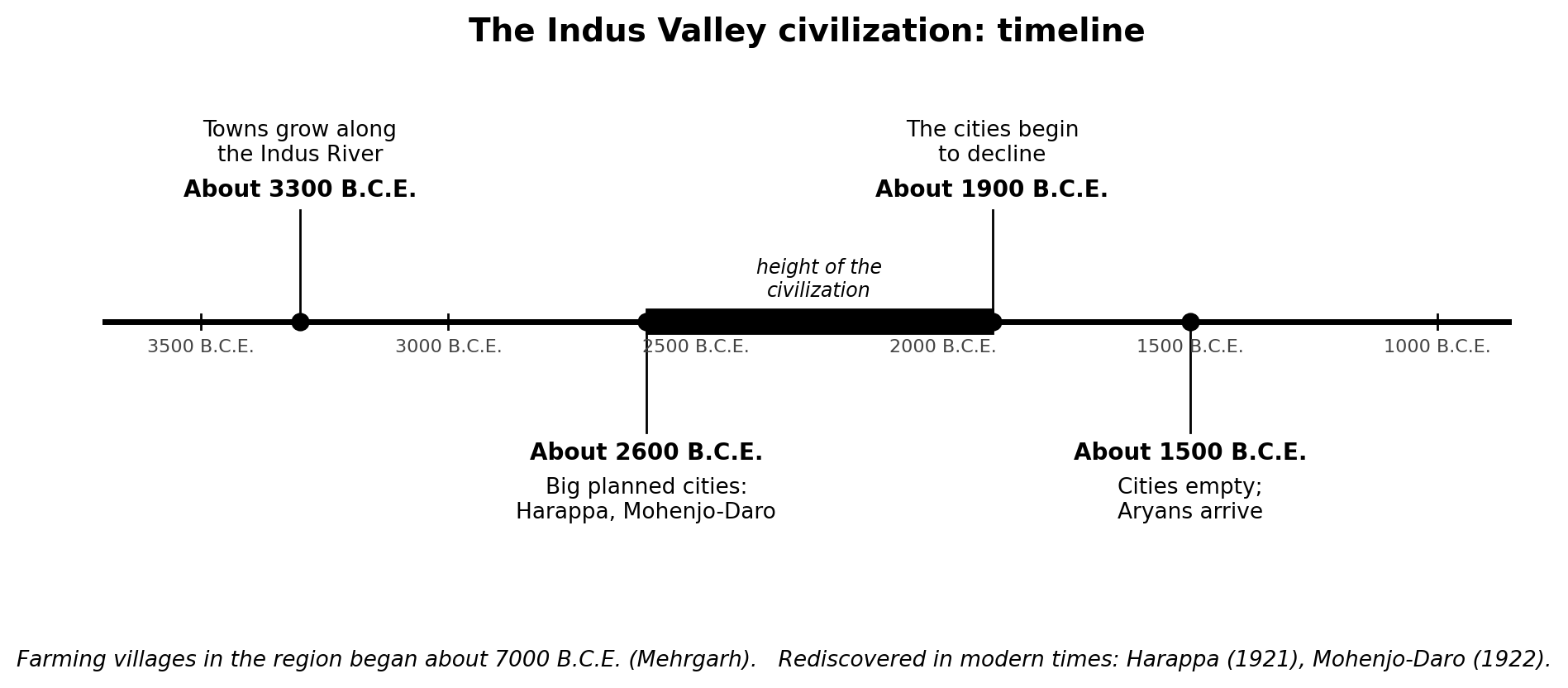
| When? | At its height about 2600–1900 B.C.E. The cities were empty by about 1500 B.C.E. (about 3,500 years ago). |
| Where? | The Indus River valley, in today's Pakistan and northwest India |
| Also called | The Harappan Civilization (after the city of Harappa) |
| Largest cities | Harappa and Mohenjo-Daro |
| Rulers | Unknown. No one can read their writing, so we do not know who ruled. |
| Known for | Large planned cities; writing that has never been deciphered; little evidence of war |
| How did it end? | The cities slowly emptied. No one knows exactly why. |
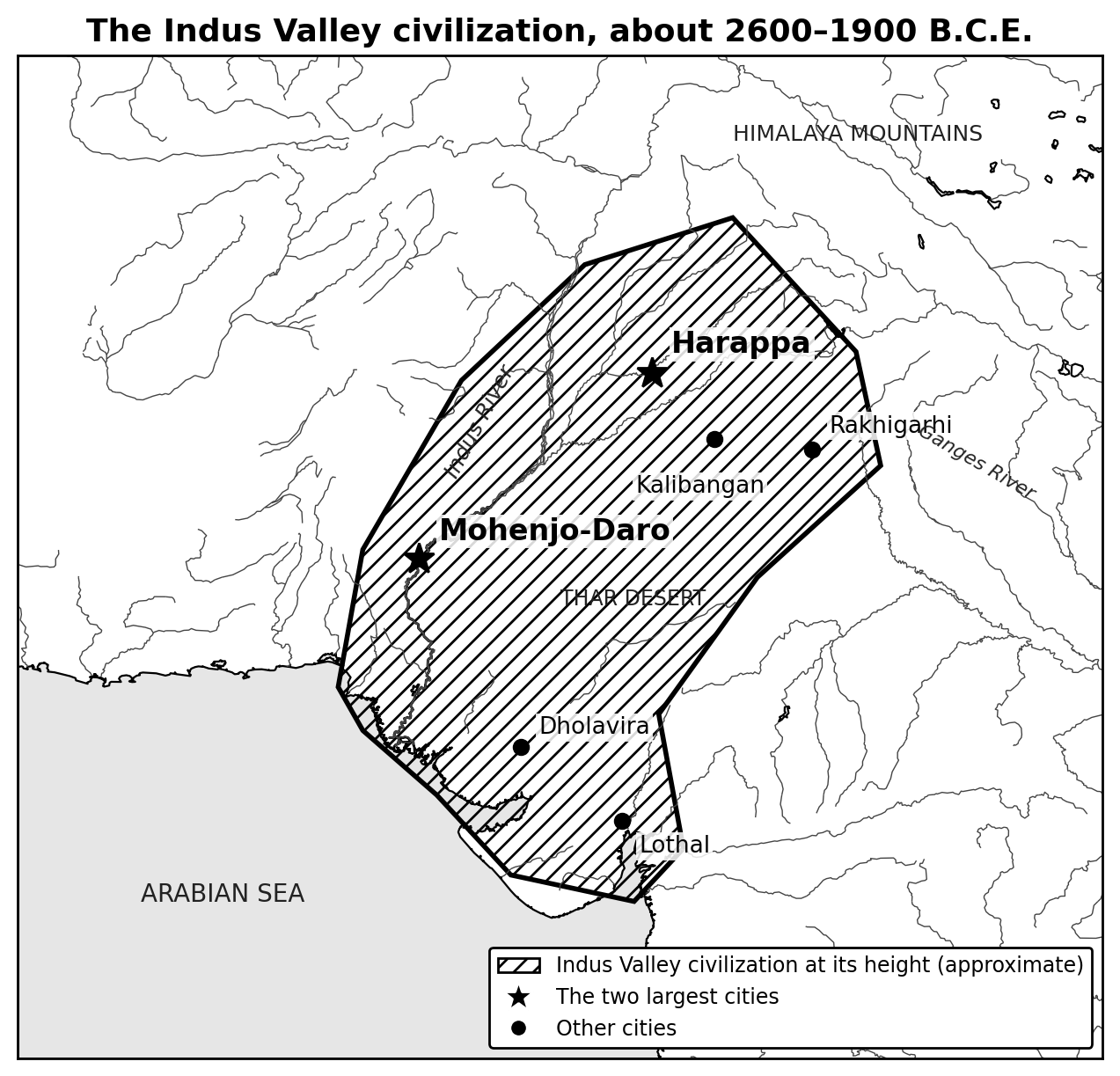
Map notes: The civilization grew along the Indus River and its branches. The river brought water and rich soil for farming. Some cities, like Lothal, were near the sea, which helped trade.
Do not confuse: Harappa is one city. The Harappans are the people of the whole civilization. The Indus River is in the west; the Ganges River is in the east. The Aryans settled along the Ganges later (see Connections).
2. SPICE-T: the Indus Valley Civilization
SPICE-T = Social, Political, Interactions, Cultural, Economic, Technology.
S — Social
- Farmers made a surplus (extra food). So not everyone had to farm.
- People did different jobs: farmers, builders, potters, bead-makers, traders. This is specialization of labor.
- Houses of different sizes suggest that some people were richer than others.
- We do not know their names, their language or their family rules, because we cannot read their writing.
Credit: Mamoon Mengal, Wikimedia Commons, CC BY-SA 1.0
P — Political
- City after city used the same plan, hundreds of kilometres apart. Planned cities are evidence of a strong government.
- Bricks were made in one standard size in every city, and traders used standard weights. Someone made and kept these rules.
- But we do not know who ruled. No famous palace, no named king and no readable law has been found.
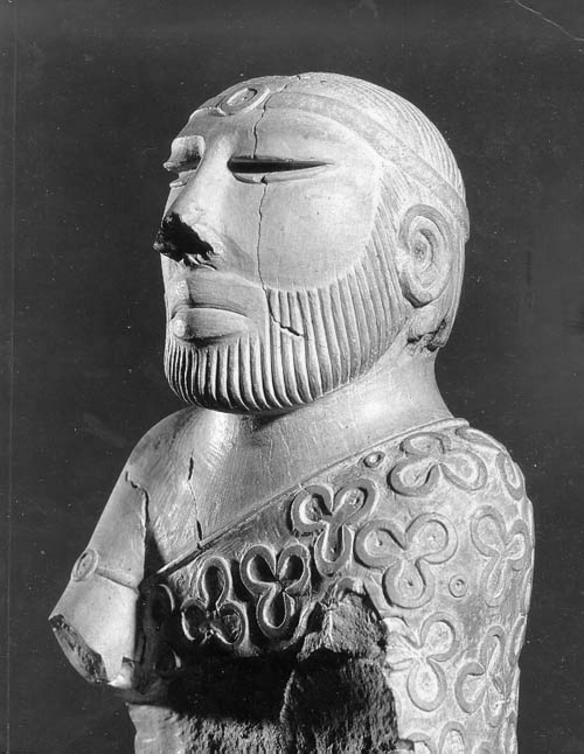
- The "Priest-King" statue is only a nickname. It does not prove there were priests or kings.
Credit: Saqib Qayyum, Wikimedia Commons, CC BY-SA 3.0
I — Interactions
- Trade by river and sea. Indus seals and beads have been found far away in Mesopotamia (today's Iraq).
- Little evidence of war. Archaeologists have found almost no weapons and no art showing soldiers or battles. Historians describe the Harappans as a largely pacifistic (peaceful) society.
- Be careful: missing evidence does not prove peace. It only means we have not found evidence of war.
C — Cultural
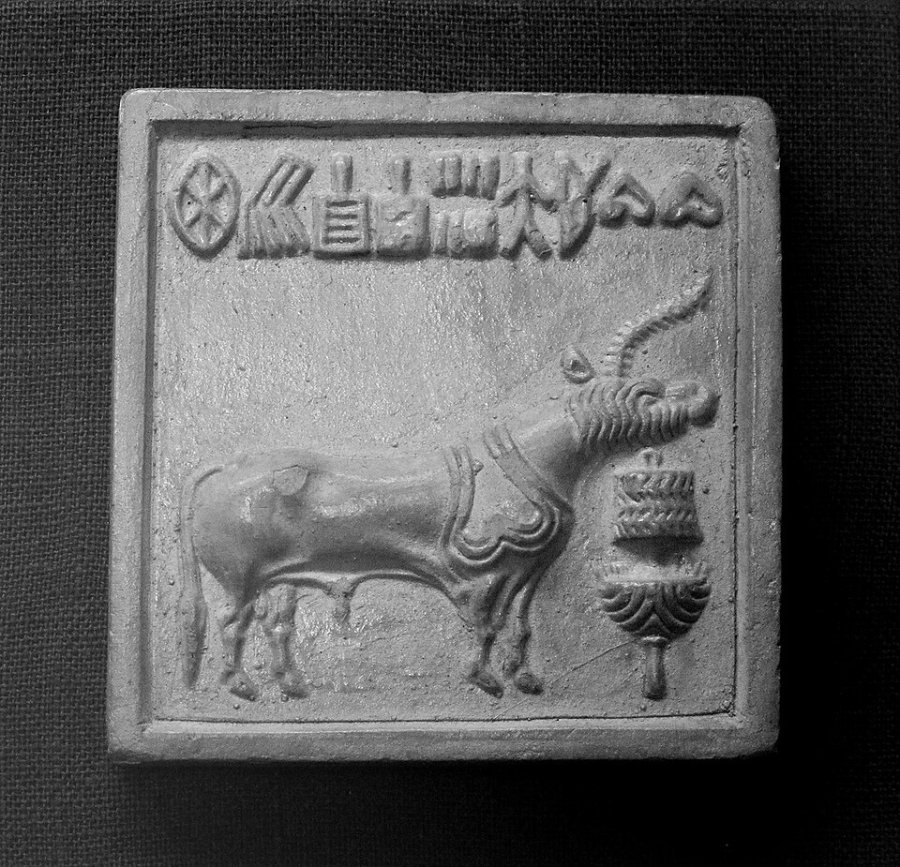
- Writing: the Harappans wrote in pictographs (picture symbols) on small stone seals. Their language is unrelated to any modern language, so their writing has never been deciphered. No one on Earth can read it.
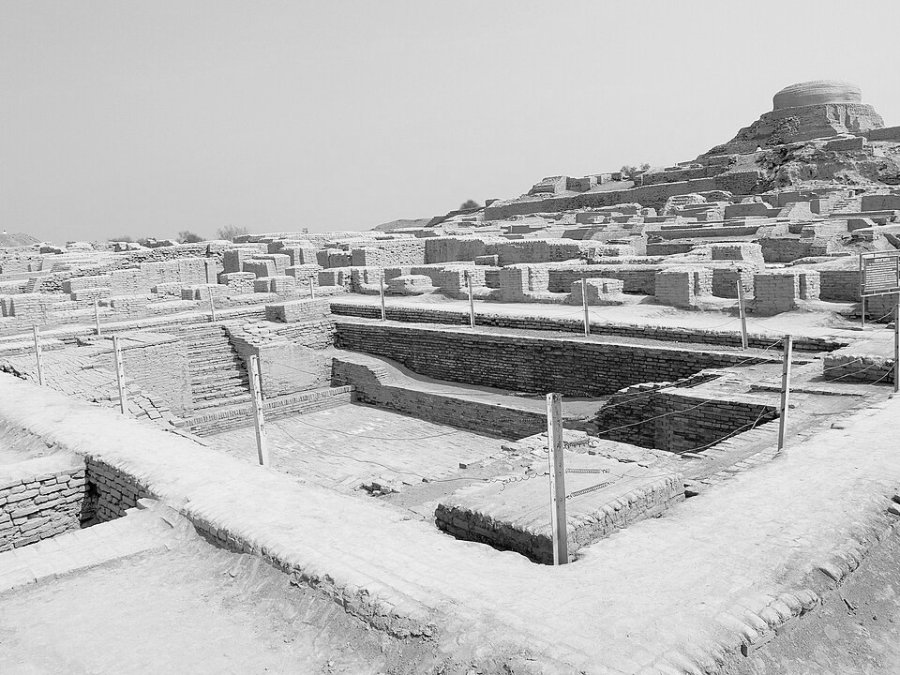
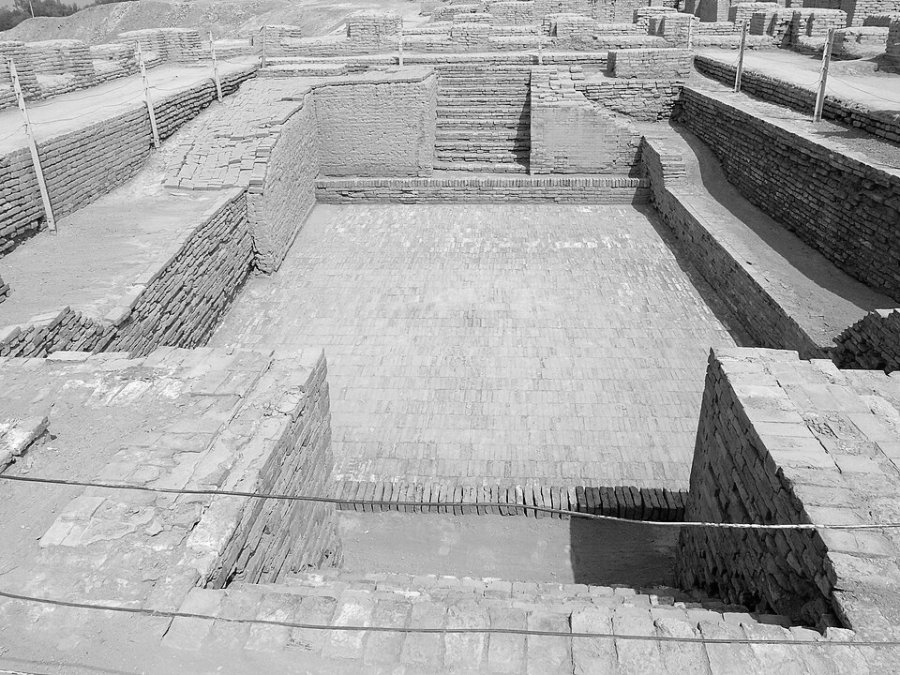
- Religion: evidence includes the Great Bath (a large public pool at Mohenjo-Daro), the "Priest-King" statue, and unnamed gods and mythical creatures shown in art.
- Careful: Harappan religion was not closely related to modern Hinduism. Do not connect it to the Trimurti.
Credit: Saqib Qayyum, Wikimedia Commons, CC BY-SA 3.0
E — Economic
- Farming on the rich soil of the Indus floodplain: wheat, barley and cotton.
- A large building that archaeologists believe stored grain. You only store grain if you have extra grain: a surplus.
- Trade: seals were probably used to mark goods. Traders used standard weights.
Credit: Ismoon, Wikimedia Commons, CC0 (public domain)
T — Technology
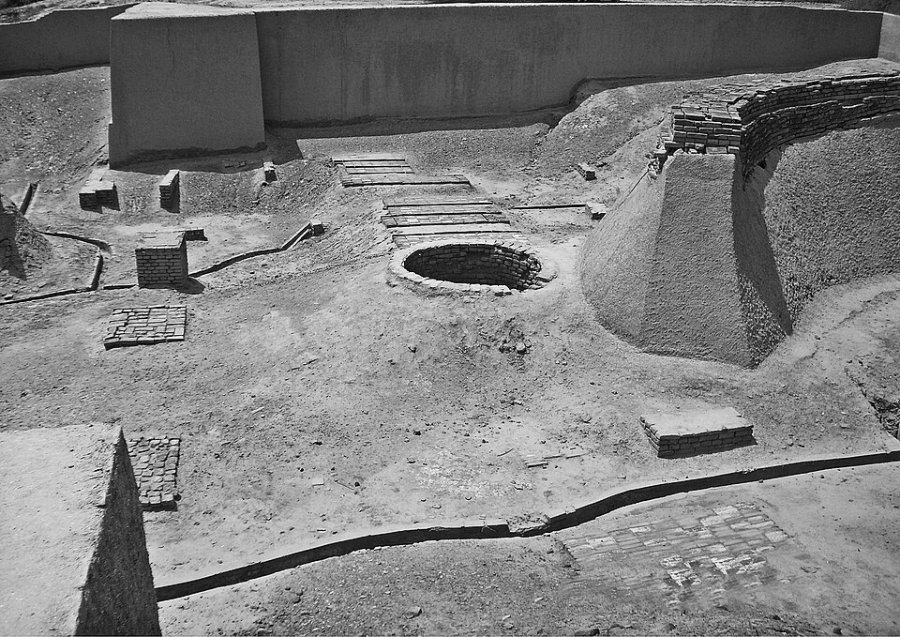
- Streets laid out on a grid: straight lines and right angles.
- Baked bricks of one standard size.
- Covered drains (sewers) under the streets carried waste away. Many houses had bathrooms and wells.
Credit: Hassan Nasir, Wikimedia Commons, CC BY-SA 3.0
3. Big ideas
- A civilization we cannot read. The Harappans had writing, but no one can read it. Everything we know comes from archaeology: objects, not words.
- Planned cities mean strong organization. The same grid, bricks and drains in city after city show a strong government, even though we do not know who ruled.
- It shows all four characteristics of civilization. Specialization of labor, social hierarchies, urbanization (cities) and a system of writing. (We can see their writing; we just cannot read it.)
- Little evidence of war. Few weapons have been found, so historians call the Harappans largely pacifistic. But missing evidence is not proof.
- An ending we cannot explain. The cities emptied by about 1500 B.C.E., and no one knows exactly why. Around the same time, the Aryans arrived in India.
4. Key sources: how do we know what we know?
| Source | What is it? | What it tells us | Be careful! |
|---|---|---|---|
| The ruins of Mohenjo-Daro (excavated from 1922) | A whole planned city: grid streets, drains, a grain store | A strong government; a food surplus; specialization of labor | Ruins show how people lived, not what they thought. |
| The Great Bath | A large brick pool in the centre of Mohenjo-Daro | Probably used for religious washing ceremonies | "Probably": no writing tells us its purpose. |
| The "Priest-King" statue (found in 1927) | A small stone statue of a bearded man | The man looks important | The name is a guess. It does not prove there were priests or kings. |
| Seals with Indus script | Small stone seals with animals and symbols | Trade and a system of writing | The writing has never been deciphered. |
| Indus seals found in Mesopotamia | Harappan objects found far away | Long-distance trade | They tell us goods travelled, not how trade was organized. |
Remember: all of these sources are objects made by insiders. There are no readable written sources, not even from outsiders. That is why we know so little about Harappan rulers, beliefs and names.
Source questions to ask every time: Who made it? When? Why did they make it? What can it tell us? What can it not tell us?
5. Timeline and vocabulary
| Word | Meaning |
|---|---|
| civilization | A complex society with specialization of labor, social hierarchies, urbanization and writing |
| surplus | More food than people need to survive right now |
| specialization of labor | Different people doing different jobs |
| social hierarchy | Groups in a society ranked from more powerful to less powerful |
| urbanization | Villages growing into cities |
| planned city | A city built to a plan, with straight streets laid out on a grid |
| grid | A pattern of straight lines that cross at right angles |
| pictograph | A picture symbol used in writing |
| decipher | To work out the meaning of writing |
| archaeology | Studying the past through objects, buildings and remains |
| pacifistic | Peaceful; not fighting wars |
| evidence | The objects, writings and remains historians use to work out what happened |
6. Connections
Before
The Indus Valley Civilization is one of the first civilizations in South Asia. It grew from farming villages: farming → surplus → specialization → cities.
At the same time: Mesopotamia
Indus traders reached Mesopotamia (today's Iraq). Indus seals and beads found there show that the two regions traded.
After: Vedic India (the Aryans)
| SPICE-T | Indus Valley (Harappans) | Vedic India (Aryans) |
|---|---|---|
| Political | Planned cities; strong but unknown government | Small kingdoms |
| Cultural | Writing that no one can read | The Vedas, in Sanskrit, which can be read |
| Interactions | Little evidence of war | Warlike herders who migrated from central Asia |
| Technology | Brick cities with drains | Almost no cities |
The link: both are known in different ways. The Harappans left cities but writing we cannot read. The Aryans left almost no cities, but they left words we can read.
Compare with China: the Shang
The Shang (Unit 1) also had writing: oracle bones. The difference: we can read Shang writing, because it grew into modern Chinese characters. We cannot read Harappan writing.
7. Where students lose marks on this topic
| Mistake | Fix |
|---|---|
| Saying the Harappans had no writing | They had writing. We just cannot read it (it has not been deciphered). |
| Saying the "Priest-King" proves Harappa had kings or priests | It is only a nickname. The statue proves nothing about who ruled. |
| Connecting Harappan religion to Hinduism or the Trimurti | Harappan religion was not closely related to modern Hinduism. |
| Saying missing weapons prove the Harappans were peaceful | Say "little evidence of war" or "largely pacifistic". |
| Mixing up the Harappans and the Aryans | Harappans = planned cities, writing we can't read. Aryans = migrants, Sanskrit, the Vedas. |
| Choosing a true fact that is not in the source | Find the words in the source that prove your answer. |
Self-check
Cover the answers. Can you answer these in complete sentences?
- Name the two largest Harappan cities.
- Why can no one read Harappan writing?
- What evidence shows that the Harappans had a strong government?
- Give ONE piece of evidence about Harappan religion.
- What do the missing weapons suggest, and why is it not proof?
- Name the four characteristics of civilization.
Check your answers (click to open)
- The two largest Harappan cities were Harappa and Mohenjo-Daro.
- No one can read Harappan writing because their language is unrelated to any modern language, so it has never been deciphered.
- City after city used the same grid plan, standard bricks and covered drains. This shows that a strong government planned and organized the cities.
- One piece of evidence is the Great Bath at Mohenjo-Daro. (Also correct: the "Priest-King" statue, or gods and mythical creatures shown in art.)
- The missing weapons suggest the Harappans were largely peaceful. It is not proof, because missing evidence only means we have not found evidence of war.
- The four characteristics are specialization of labor, social hierarchies, urbanization and systems of writing.