Home › East Asian Civilization
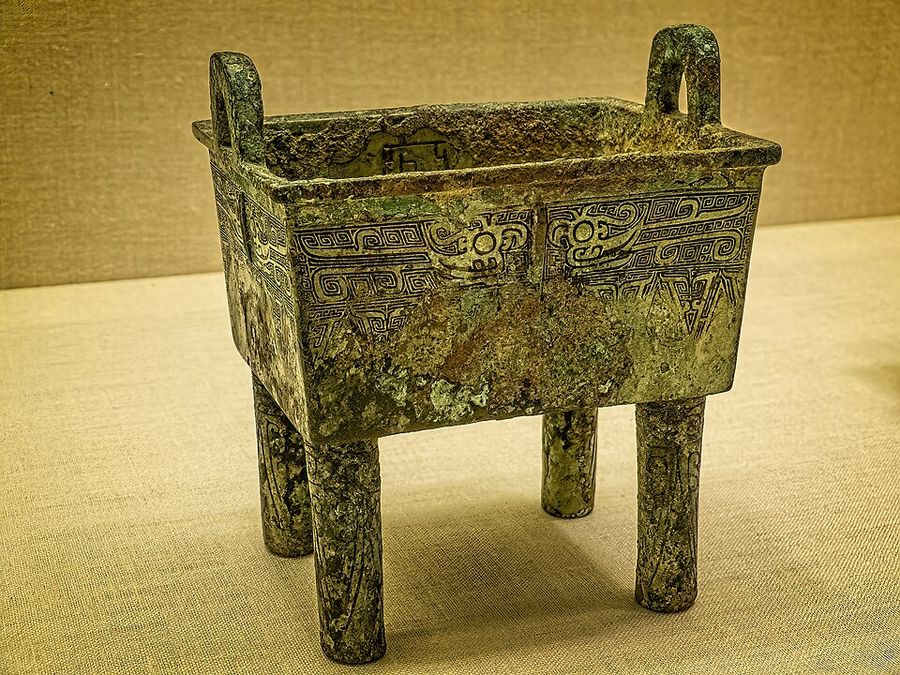
Unit 1: Ancient Civilizations
East Asian Civilization · Grade 7 · Quarter 1 · Unit Packet
1. The guiding question: how do we know what we know?
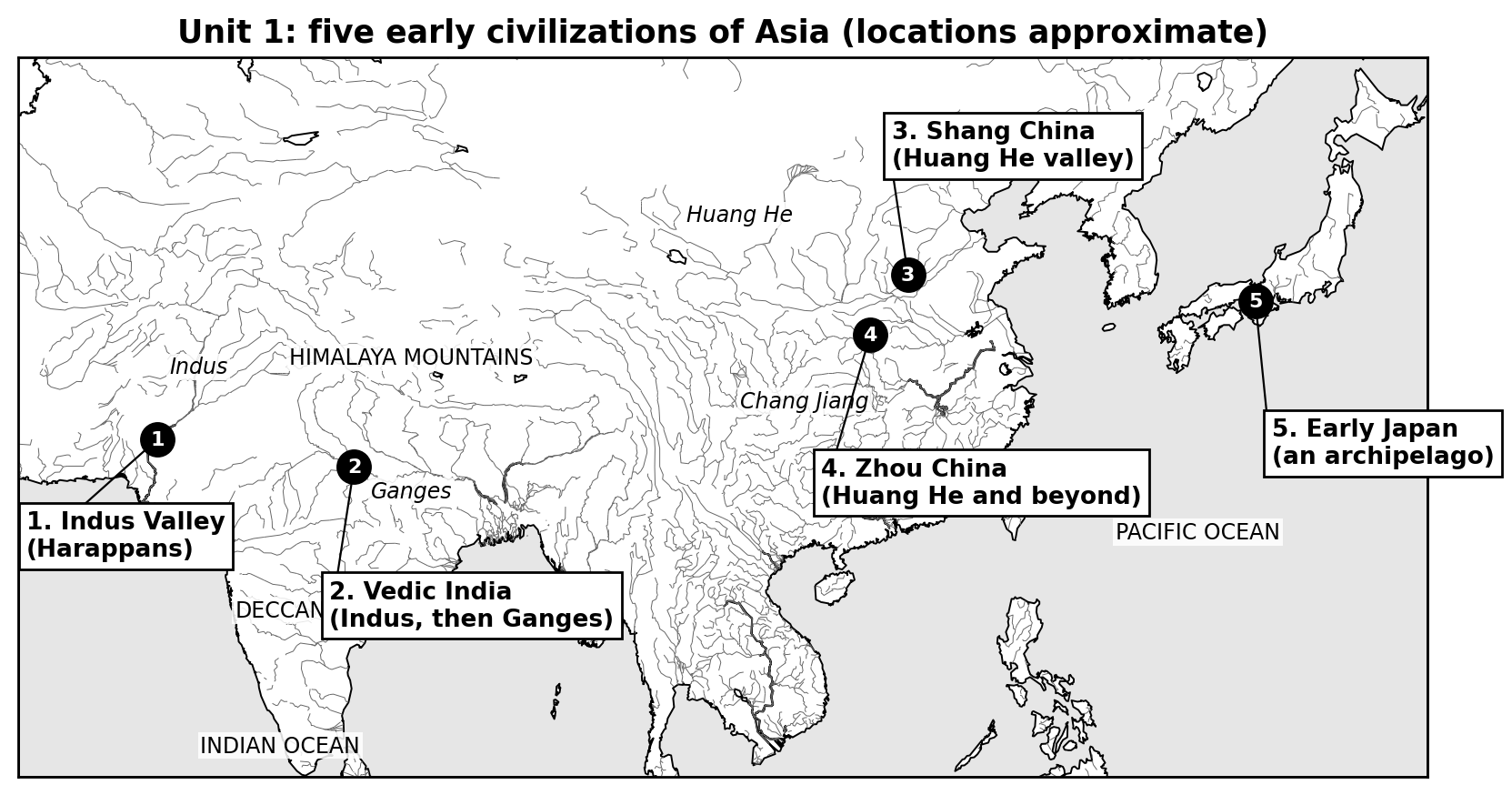
This unit visits five early civilizations of Asia. For each one, we ask the question that guides the whole course: how do we know what we know? The answer is different every time.
| Civilization | Where? | How do we know? |
|---|---|---|
| Indus Valley (Harappans) | Indus River valley | Writing we can see but cannot read |
| Vedic India (Aryans) | Indus, then Ganges valleys | The Aryans left no writing. The Vedas were memorized for centuries, then written down by believers. |
| Shang China | Huang He (Yellow River) valley | Writing we can read: oracle bones |
| Zhou China | Huang He valley and beyond | Rival thinkers arguing on purpose, in writing |
| Early Japan | An archipelago | No writing of their own; a book written 400 years late in a borrowed script; a tomb nobody can open |
The unit begins with writing nobody can read. It ends standing outside a tomb nobody can open.
2. From farming to civilization
For most of history, people were hunter-gatherers. Then people learned to farm. That one change led to everything else.
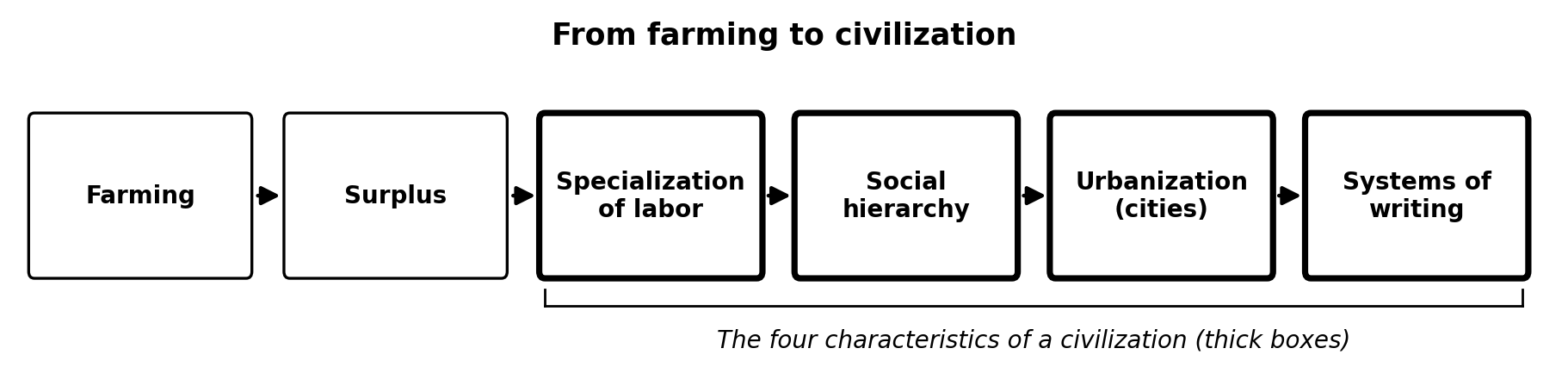
- Farming (the agricultural revolution): people stay in one place.
- Surplus: farmers grow more food than they need.
- Specialization of labor: not everyone has to farm, so people do different jobs.
- Social hierarchy: some jobs carry more power and wealth, so groups are ranked.
- Urbanization: villages grow into cities.
- Systems of writing: someone has to keep records of trade and taxes.
The four characteristics of a civilization:
| Characteristic | What it means |
|---|---|
| Specialization of labor | Different people do different jobs |
| Social hierarchy | Groups are ranked from more powerful to less powerful |
| Urbanization | Villages grow into cities |
| System of writing | People keep written records |
Why writing matters most to historians: a society with no writing is called prehistoric. Without writing, we can never fully know what people believed or said.
3. Where civilizations grew: river valleys and islands
Rivers flood. When they do, they leave behind rich soil, perfect for farming. So most early civilizations in Asia grew in river valleys.
| Region | Where civilization emerged |
|---|---|
| China | Two river valleys: the Huang He (Yellow River) in the north and the Chang Jiang (Yangzi River) in the south |
| South Asia | First the Indus and Saraswati river valleys; later the Ganges valley. The Deccan in the south developed later. |
| Japan | An archipelago (a chain of islands) with no great river. The earliest societies grew in the Kansai region on Honshu, the largest island. |
4. Creation myths of India and Japan
A creation myth is a story that explains how the world began.
| India (Hindu belief) | Japan | |
|---|---|---|
| The gods | The Trimurti ("group of three"): Brahma creates, Vishnu preserves, Shiva destroys | Izanagi and Izanami |
| The story | The world is created, destroyed and created again | The gods stir the ocean with a jeweled spear; drops harden into the first island; they make the rest one by one |
| What it shows | Time is a cycle, not a straight line | The islands of Japan, made one at a time |
| Written in | The Puranas (first millennium C.E.) | The Kojiki (712 C.E.) |
Geography and myth: Japan is an archipelago, so its myth is about islands being made.
5. SPICE-T across the unit
SPICE-T = Social, Political, Interactions, Cultural, Economic, Technology.
| Indus Valley | Vedic India | Shang China | Zhou China | Early Japan | |
|---|---|---|---|---|---|
| S | Few signs of rich and poor | Caste system: brahmins, kshatriya, vaisyas, shudras | King, nobles, craftworkers, farmers, slaves | Confucius's five relationships; filial piety | Jōmon: small groups, possibly matriarchal; Kofun: powerful rulers |
| P | Unknown: we cannot read their writing | Small kingdoms | Dynasty; king rules with ancestors' advice | Mandate of Heaven; fengjian, then decentralization | Jōmon: no kings; Kofun: rulers strong enough to build giant tombs |
| I | Trade, including with Mesopotamia | Migration from central Asia | Wars; defeated by the Zhou | Defeated the Shang; Warring States | The sea slowed new ideas; borrowed China's writing |
| C | Indus script, seals, the Great Bath | Vedas, samsara, dharma, karma; the Buddha | Oracle bones, ancestor worship | Hundred Schools: Confucianism, Daoism, Legalism | Shinto and kami; the Kojiki |
| E | Farming; trade | Herding, then farming | Farming millet; bronze workshops | Farming; later, coins | Jōmon: hunter-gatherers; later, farming |
| T | Planned cities, drains, baked bricks | Long texts kept by memory | Bronze casting; chariots | Bronze inscriptions; later, iron | Pottery; keyhole-shaped Kofun tombs |
6. Unit timeline
| Date (approximate) | What happened |
|---|---|
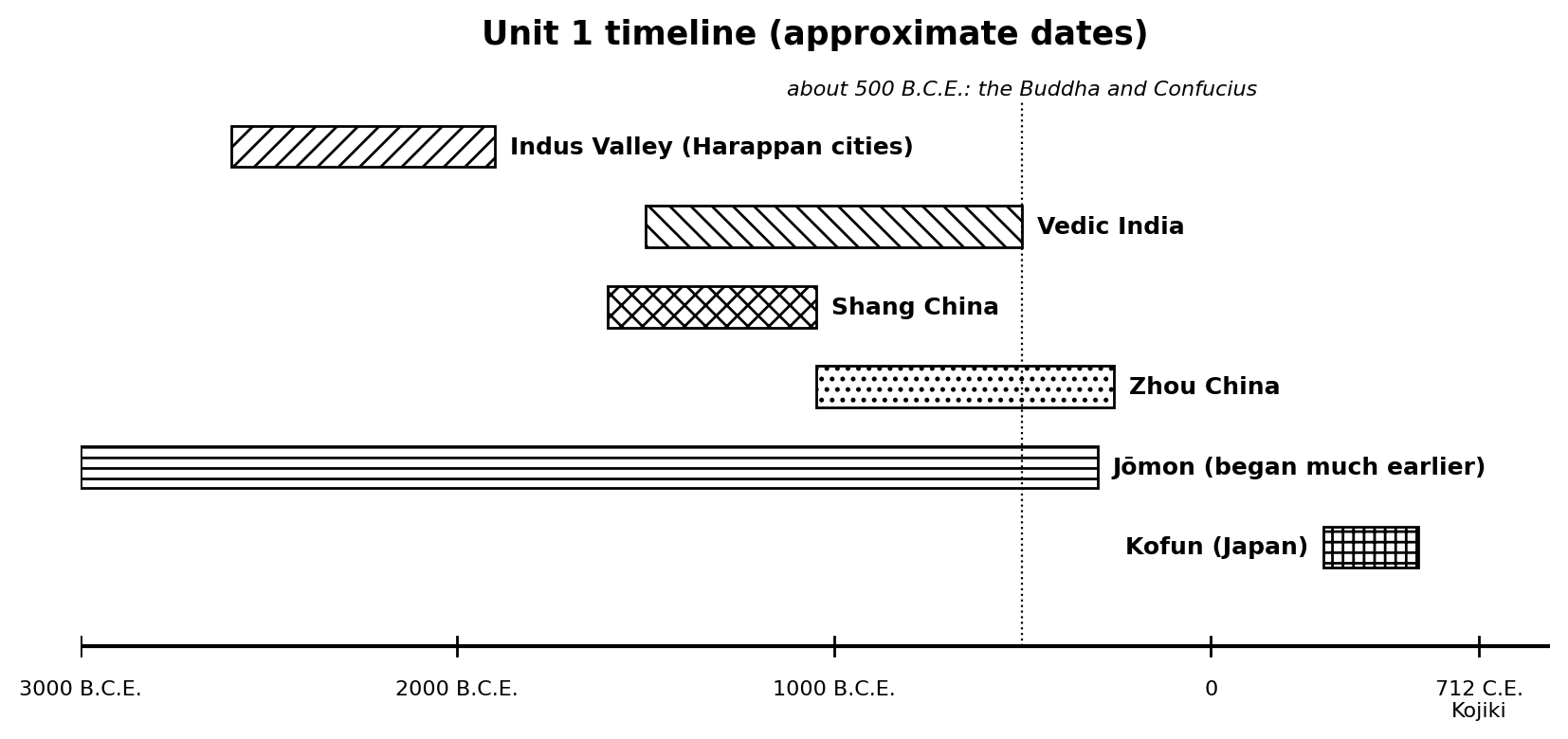
| About 2600–1900 B.C.E. | The great Harappan cities |
| About 1600–1046 B.C.E. | The Shang Dynasty |
| About 1500–500 B.C.E. | The Vedic Period |
| 1046–256 B.C.E. | The Zhou Dynasty |
| About 500 B.C.E. | The Buddha in India; Confucius in China |
| Thousands of years, ending about 300 B.C.E. | The Jōmon in Japan |
| About 300–550 C.E. | The Kofun period in Japan |
| 712 C.E. | The Kojiki is finished |
7. Skills for the test
Task verbs
| Verb | What you must do |
|---|---|
| Identify | Name it, or give an example |
| Describe | Say what it was like: list its characteristics |
| Explain | Give the reasons why or how something happened |
| Compare | Describe or explain similarities or differences |
Two kinds of source question
| Question type | What it wants | Clue words |
|---|---|---|
| Analyzing Evidence | An answer from the exact words of the source. A true fact that is not in the source is wrong. | "According to the passage…", "best supported by the passage" |
| Sourcing / Context | Outside knowledge: who made it, when, why, and what was happening at the time | "contextualizes", "Why would…", "What does the date tell us?" |
Writing an answer: TEA
Topic: answer the question in one sentence. Evidence: give a specific fact or quote. Analysis: explain how your evidence proves your answer.
The five traps on multiple-choice questions
| Trap | What it looks like |
|---|---|
| True but not supported | A true fact that is not in the source (on an Analyzing Evidence question) |
| Too strong | Words like "always", "every", "proves", "never" |
| Plausible invention | Sounds right, but the detail is made up |
| Yesterday's trap in costume | A fact from a different civilization or lesson, dressed up to fit |
| The similarity in disguise | On a "difference" question, an answer that is true of both sides |
Also check the verb: a true answer that does the wrong job (it describes when the question says contextualize) is still wrong.
8. Where students lose marks in Unit 1
| Mistake | Fix |
|---|---|
| "No one can read Shang writing" | That is the Harappans. Shang writing can be read. |
| "The Aryans were Hindus" | Not yet. The Vedic religion was the root of Hinduism. |
| "The Shang made the Mandate of Heaven" | The Zhou made it, to justify defeating the Shang. |
| "Japan's religion came from China" | Japan borrowed China's writing, not its religion. |
| Calling Kofun a religion | Kofun is a period and a kind of tomb. The religion is Shinto. |
| "Confucius wrote the Analects" | His students wrote down his sayings after he died. |
| "It was a long time ago" as an evidence problem | Name the specific problem for that civilization (see Section 1). |
| A difference answer that is true of both sides | Check that it is true of only one side. |
| Choosing a true fact not in the source | On "according to the passage" questions, prove it with the source's words. |
9. Self-check
Cover the answers. Can you answer these in complete sentences?
- Name the four characteristics of a civilization.
- Why did most early civilizations grow in river valleys?
- For each of the five civilizations, name the problem historians face.
- How is the Hindu creation myth different from the Japanese creation myth?
- What is the difference between an Analyzing Evidence question and a Sourcing/Context question?
- What is the "similarity in disguise" trap?
Check your answers (click to open)
- The four characteristics are specialization of labor, social hierarchy, urbanization and a system of writing.
- Rivers flood and leave rich soil behind, which is perfect for farming. Farming produced a surplus, and a surplus made civilization possible.
- The Harappans left writing no one can read. The Aryans left no writing; the Vedas were memorized and written down much later by believers. The Shang left writing we can read, on oracle bones. The Zhou thinkers argued in writing, but we are not certain who wrote each book. Early Japan had no writing of its own; the Kojiki was written 400 years late in a borrowed script, and the greatest tomb has never been opened.
- The Hindu myth describes a cycle: the world is created, destroyed and created again. The Japanese myth describes the islands of Japan being made one at a time.
- An Analyzing Evidence question must be answered from the exact words of the source. A Sourcing/Context question needs outside knowledge about who made the source, when and why.
- On a question about a difference, it is an answer that is true of both sides, so it is not a difference at all.