Home › East Asian Civilization › Unit 1
Shang China (about 1600–1046 B.C.E.)
East Asian Civilization · Unit 1 · Civilization Packet
1. At a glance
| Question | Answer |
|---|---|
| When? | About 1600–1046 B.C.E. (about 3,600 to 3,000 years ago) |
| Where? | The Huang He (Yellow River) valley in northern China |
| Who? | The Shang Dynasty: a line of kings from one family |
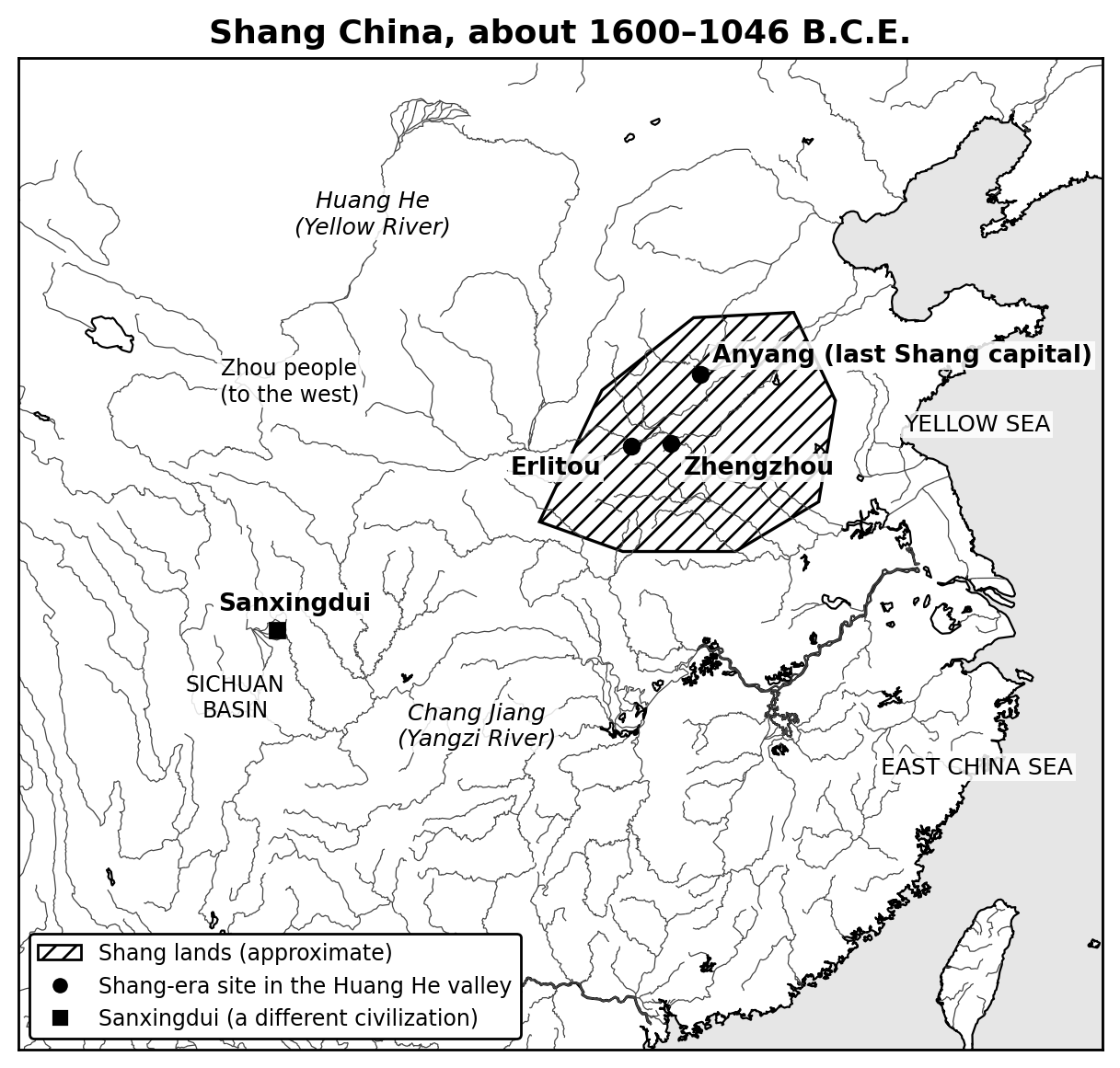
| Capital | The Shang moved their capital several times. The last and best-known capital was near today's Anyang. |
| Known for | Oracle bones, the oldest Chinese writing we can read; ritual bronzes; honoring ancestors |
| How do we know? | Their own writing, which we can read, plus objects found by archaeologists |
| Ended | In about 1046 B.C.E. the Zhou defeated the Shang |
Why the Shang matter: the Shang were China's first fully-documented civilization. "Documented" means they left written records of their own, and we can still read them today.
2. Before the Shang: Erlitou and the Xia
- Erlitou is a site in the Huang He valley, almost 4,000 years old. Archaeologists found palaces, bronze workshops and planned streets. They found no writing at all.
- Many centuries later, Chinese historians wrote about a line of kings they called the Xia Dynasty.
- Many historians think Erlitou and the Xia were the same civilization. But the name "Xia" comes only from later sources. So historians still argue: was the Xia real, or only a legend?
With the Shang, the arguing stops, because the Shang wrote things down themselves.
3. SPICE-T: Shang China
SPICE-T = Social, Political, Interactions, Cultural, Economic, Technology.
S — Social
Shang society was a social hierarchy (ranked from top to bottom):
| Rank | Who | What they did |
|---|---|---|
| Top | The king and the royal family | Ruled; asked the ancestors for advice |
| Nobles and priests | Led armies; carved and read the oracle bones | |
| Craftworkers | Made bronze, pottery and jade | |
| Farmers | Grew the food (most people) | |
| Bottom | Slaves, often prisoners of war | Hard labor; some were killed as sacrifices |
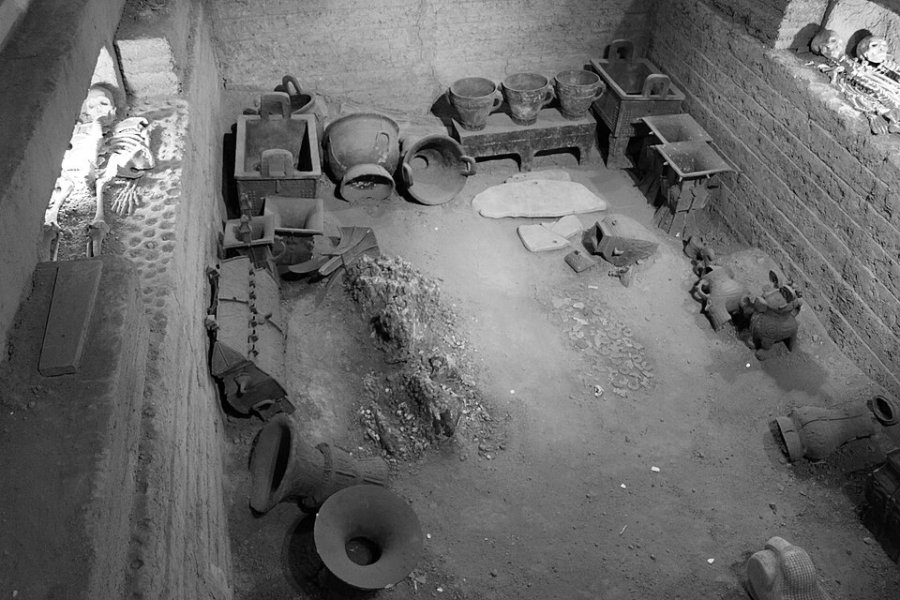
Lady Fu Hao was a wife of King Wu Ding. Oracle bones show she led armies and performed rituals. Her tomb, found in 1976 at Anyang, was full of bronzes, jade and weapons.
Credit: Gary Todd, Wikimedia Commons, CC0 (public domain)
P — Political
- A dynasty is a series of rulers who all come from the same family. The Shang kings passed power down inside one family for about 500 years.
- The king was both a political and a religious leader. He asked the ancestors for advice before making decisions about war, farming and building.
- The king ruled the land near the capital directly. Further away, nobles ruled for him.
I — Interactions
- The Shang fought many wars with their neighbors. They used bronze weapons and, later, horse-drawn chariots.
- Prisoners of war became slaves or sacrifices.
- In about 1046 B.C.E., the Zhou people from the west defeated the Shang and became China's new rulers.
C — Cultural
- Ancestor worship: the Shang believed dead ancestors could help or harm the living. The king made offerings to them.
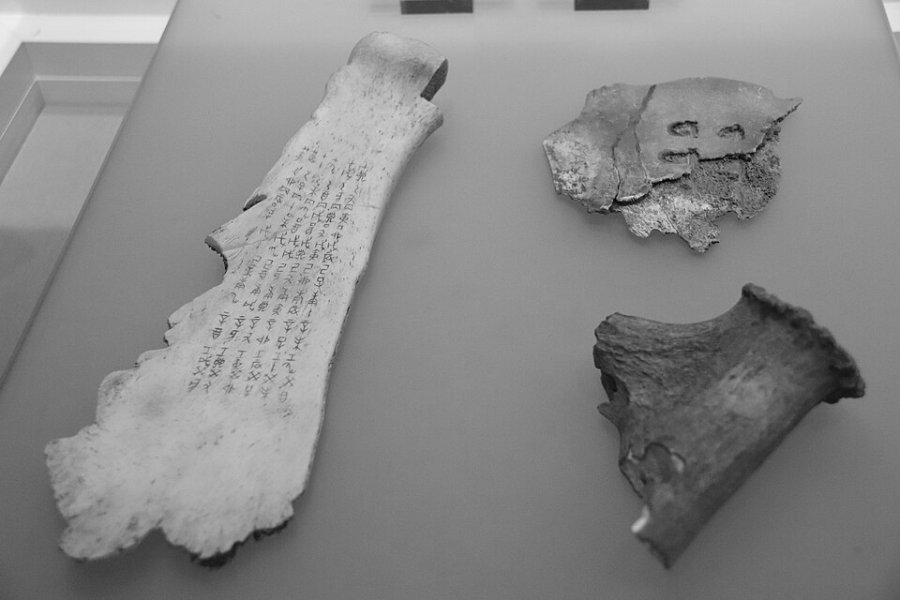
- Oracle bones: a king asked a question about the future: Will it rain? Will the harvest be good? Should we go to war? A priest carved the question onto an animal bone or a turtle shell, then heated it until it cracked. He read the cracks as the answer from the gods and ancestors. More than 100,000 oracle bones have been found.
- Writing: the oracle bone script slowly grew into the Chinese characters still used today. That is why scholars can decipher (read) it.
Credit: Gary Lee Todd, Wikimedia Commons, CC0 (public domain)
E — Economic
- Most people were farmers. They grew millet (a grain) in the rich soil of the Huang He valley.
- Skilled workers in bronze workshops made vessels and weapons for the king and nobles.
- The Shang also raised silkworms and wove silk.
T — Technology
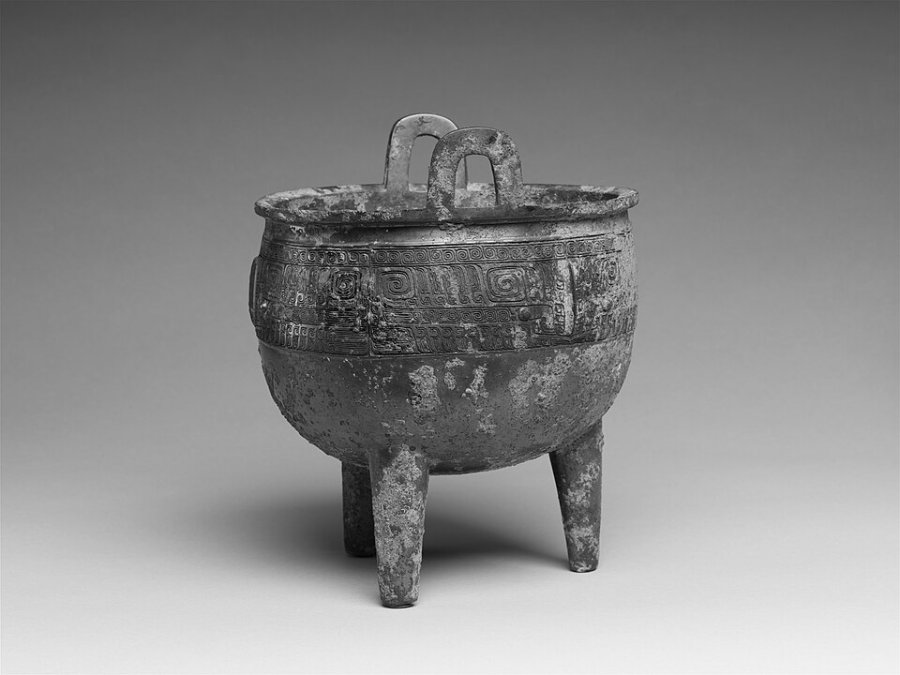
- Bronze casting: the Shang made large, detailed ritual bronzes: bronze vessels used in ceremonies to honor their ancestors. Bronze was costly, so only the rich and powerful owned it.
- Chariots pulled by horses (from about 1200 B.C.E.).
- A calendar: the oracle bones even record the days of the Shang calendar.
Credit: The Metropolitan Museum of Art, Wikimedia Commons, CC0 (public domain)
4. Big ideas
- The bones still talk. Harappan writing can be seen but not read. Shang writing can be read, because the language survived and grew into modern Chinese characters.
- Later sources passed the test. Later Chinese books contain a list of the Shang kings. The oracle bones show the same royal names, in almost the same order. This is one reason many historians think the Xia may have been real too.
- Religion and power went together. The king spoke to the ancestors, and that gave him the right to rule.
- Bronze meant power. Bronze vessels and weapons belonged to the people at the top.
5. Key sources: how do we know what we know?
| Source | Who made it? When? | Insider or outsider? | What it tells us | Be careful! |
|---|---|---|---|---|
| Oracle bones (for example, from Anyang, about 1200 B.C.E.) | Shang kings and priests, at the time | Insider | Names of kings, gods and ancestors; worries about weather, harvests, battles and births; the calendar | They show what the king worried about. They tell us little about ordinary farmers. |
| Ritual bronzes | Shang craftworkers, at the time | Object | Shang skill, wealth and religion | An object does not explain itself. Experts must work out how it was used. |
| Fu Hao's tomb (found 1976) | Buried about 1200 B.C.E. | Object | Royal wealth; a powerful woman | One tomb shows one rich person's life, not everyone's. |
| Later Chinese history books | Historians, many centuries later | Outsider (later) | A list of Shang kings; stories about Xia and Shang | Written long after. Checked against the oracle bones. |
Remember: an oracle bone is a written record from the time. A ritual bronze is an object. Know which kind of evidence you are using.
6. Timeline and vocabulary
| Date (approximate) | What happened |
|---|---|
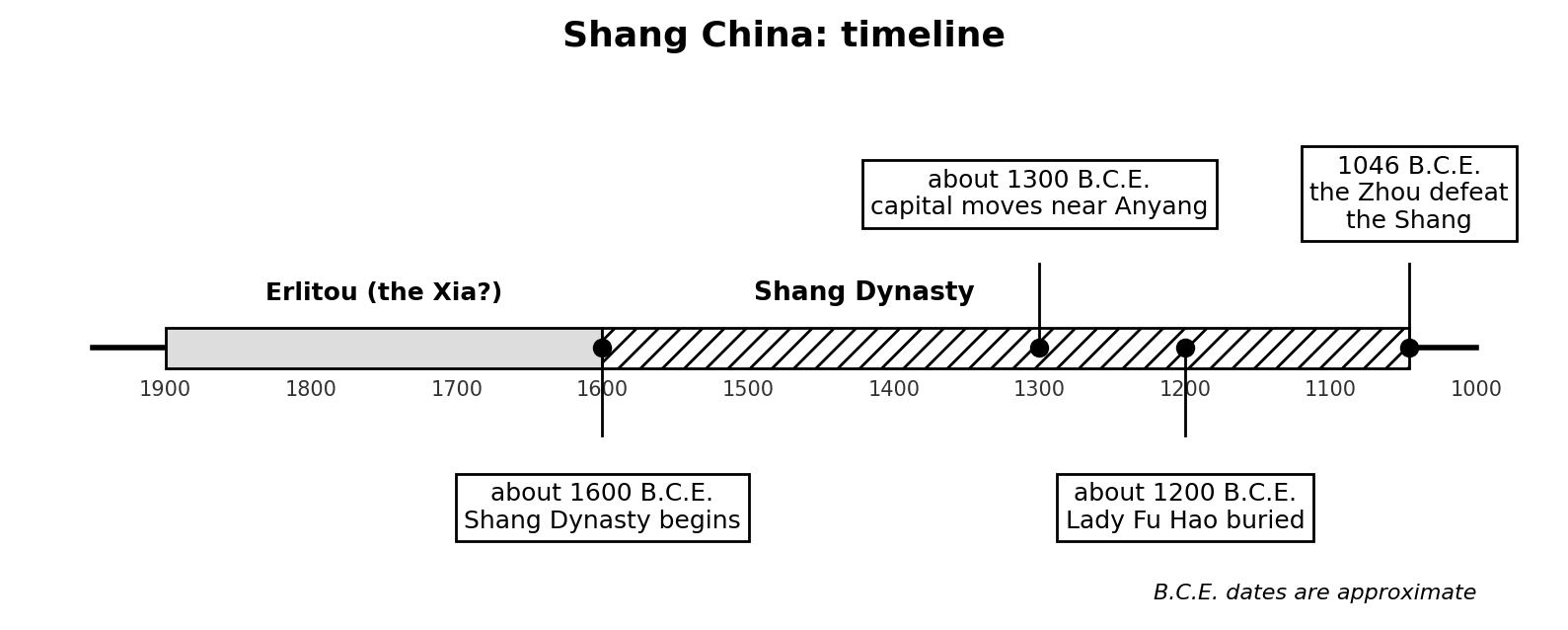
| About 1900–1500 B.C.E. | Erlitou: palaces and bronze, but no writing (the Xia?) |
| About 1600 B.C.E. | The Shang Dynasty begins |
| About 1300 B.C.E. | The Shang capital moves to near Anyang |
| About 1200 B.C.E. | Lady Fu Hao is buried at Anyang |
| About 1046 B.C.E. | The Zhou defeat the Shang |
| 1899 C.E. | Scholars recognize writing on "dragon bones" sold as medicine: the oracle bones are rediscovered |
| Word | Meaning |
|---|---|
| dynasty | A series of rulers who all come from the same family |
| Huang He | The Yellow River in northern China |
| site | A place where archaeologists dig and study |
| document | A written record from the time being studied |
| documented | Having written records of its own that we can read |
| oracle bones | Bones or turtle shells carved with questions and heated until they cracked, to learn the future |
| ritual bronzes | Bronze vessels used in ceremonies to honor ancestors |
| ancestor worship | Honoring dead family members, who were believed to help or harm the living |
| decipher | To work out what writing means |
| social hierarchy | A society ranked from top to bottom |
7. Connections
Indus Valley vs Shang: how do we know?
| Indus Valley (Harappans) | Shang China | |
|---|---|---|
| Writing | We can see it, but no one can read it | We can read it |
| Why? | The language did not survive | It grew into Chinese characters used today |
| Main evidence | Cities, seals, objects | Oracle bones, bronzes, tombs |
Across China: Sanxingdui
At the same time as the Shang, a different civilization lived far to the south, at Sanxingdui in the Sichuan Basin, near the Chang Jiang (Yangzi River). It made giant bronze masks that look like nothing the Shang made. Sanxingdui left no writing, and no later Chinese books mention it. Its evidence problem is different again.
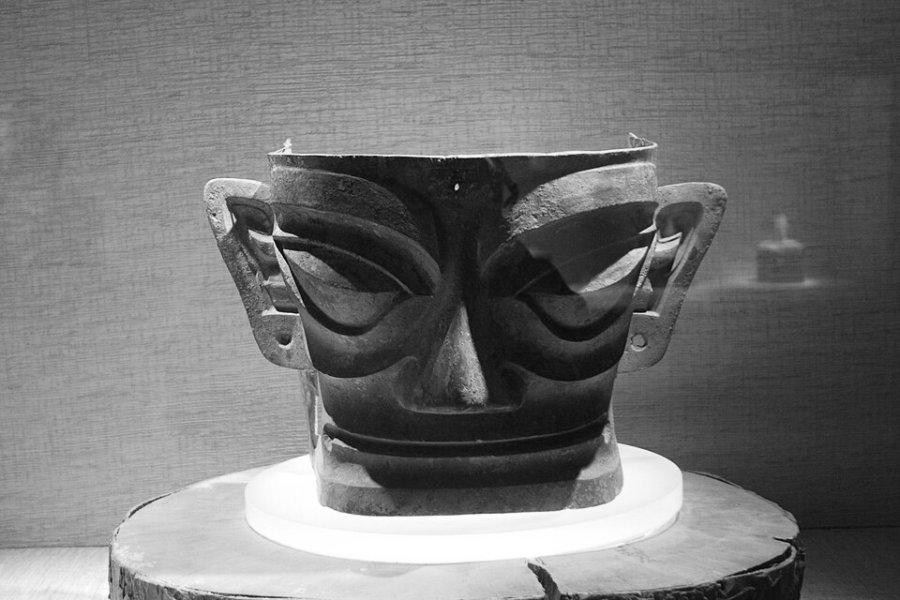
Credit: Gary Todd, Wikimedia Commons, CC0 (public domain)
Next: the Zhou
The Zhou defeated the Shang in about 1046 B.C.E. To justify their conquest, they said the last Shang king was cruel, so Heaven took away his right to rule: the Mandate of Heaven. See the Zhou China packet.
8. Where students lose marks on this topic
| Mistake | Fix |
|---|---|
| Saying "no one can read Shang writing" | That is the Harappans. Shang writing can be read. |
| Saying the Xia is proven | Historians still argue. Erlitou left no writing; the name "Xia" comes from later books. |
| Calling a ritual bronze a written record | A bronze is an object. An oracle bone is a written record. |
| Saying oracle bones were for writing letters or keeping lists | They were for asking the gods and ancestors about the future. |
| Mixing up the Shang and the Zhou | Shang = oracle bones, first documented dynasty. Zhou = Mandate of Heaven, defeated the Shang. |
| Choosing a true fact that is not in the source | On "according to the passage" questions, find the words in the source that prove your answer. |
| Saying Shang writing "is modern Chinese" | It grew into modern Chinese characters over 3,000 years. It is the ancestor, not the same thing. |
Self-check
Cover the answers. Can you answer these in complete sentences?
- What is a dynasty?
- Why do historians argue about whether the Xia was real?
- What made the Shang China's first fully-documented civilization?
- Describe how an oracle bone was used.
- Why can scholars read Shang writing but not Harappan writing?
- How did later Chinese books "pass the test"?
Check your answers (click to open)
- A dynasty is a series of rulers who all come from the same family.
- Historians argue because the people of Erlitou left no writing of their own. The name "Xia" comes only from books written many centuries later.
- The Shang left written records of their own, and we can still read them today.
- A king asked a question about the future. A priest carved it onto a bone or turtle shell, heated it until it cracked, and read the cracks as the answer from the gods and ancestors.
- Shang writing grew into the Chinese characters still used today, so the language survived. Harappan writing has no surviving language to help us read it.
- Later books listed the Shang kings, and the oracle bones show the same royal names in almost the same order.