Home › East Asian Civilization › Unit 2
Korea's Three Kingdoms and Japan's Great Change (about 100 B.C.E.–700 C.E.)
East Asian Civilization · Unit 2 · Civilization Packet
1. At a glance
| Question | Answer |
|---|---|
| When? | The Han takes northern Korea in 108 B.C.E.; the Three Kingdoms period follows; Japan's Taika Reforms begin in 645 C.E. and the Taiho Code comes in 701 C.E. |
| Where? | The Korean peninsula (the land between China and Japan), and Japan |
| Who? | The three kingdoms of Korea: Goguryeo (north), Baekje (southwest) and Silla (southeast); Japan's Yamato court and Prince Shotoku |
| Big idea | A relay of ideas. China was the source. Korea was the bridge. Japan rebuilt itself in China's image. |
| Known for | Korea adopting Chinese writing and Buddhism; Baekje passing them on to Japan; Japan's Taika Reforms and Taiho Code |
| How do we know? | Chinese chronicles (outsiders); Korea's own Samguk Sagi, written 500 years later; Japan's Nihon Shoki (720 C.E.) |
Unit 2's big question: how do you hold a big thing together? The answer here: borrow the best tools from a stronger neighbour (writing, Buddhism, a bureaucracy, written law) and make them your own.
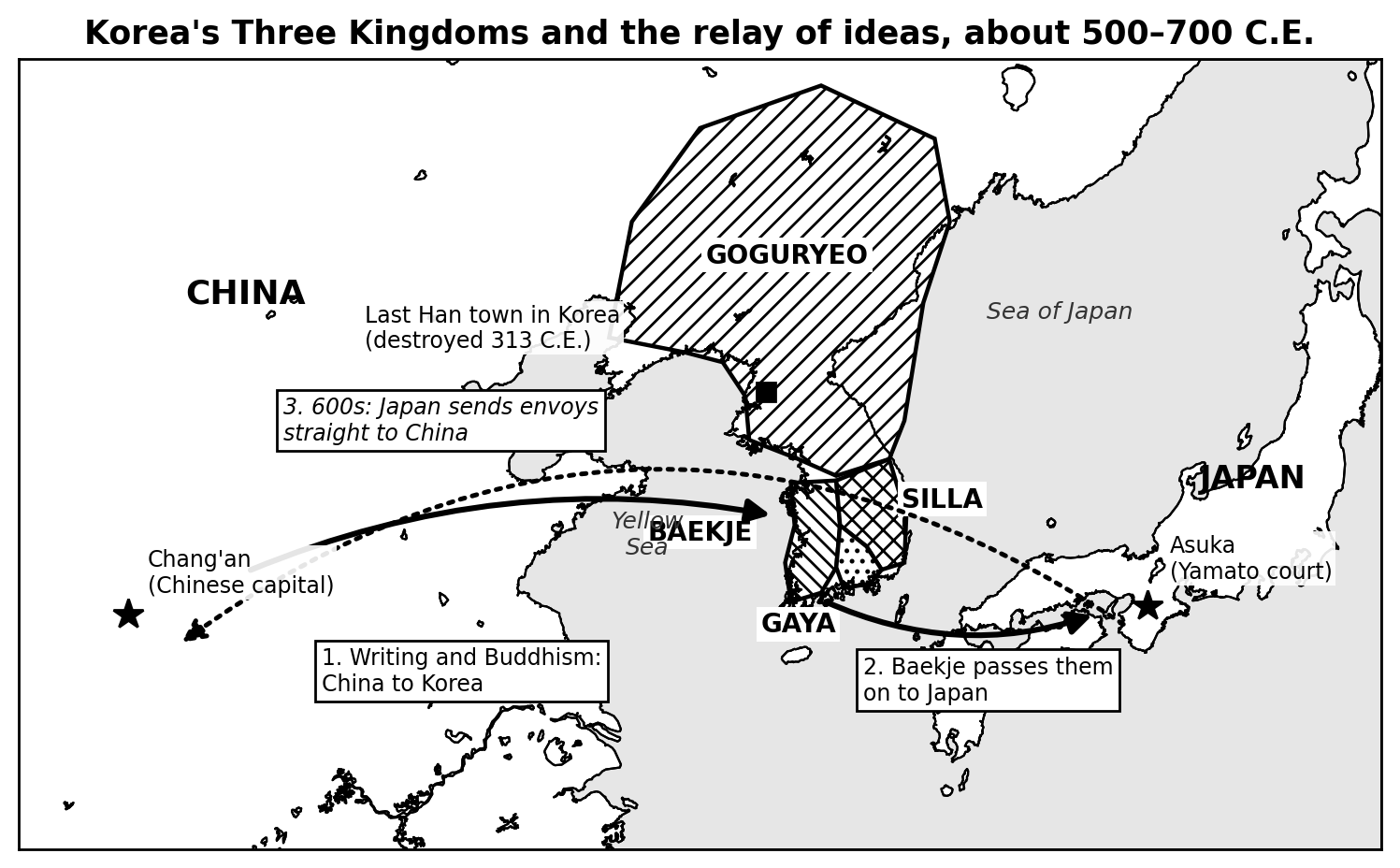
2. The story in three parts
1. The space the Han left (background: not on the test)
This part sets the scene. It will not be graded.
- In 108 B.C.E. a Han army took control of the north of the Korean peninsula (a peninsula is land with water on almost every side). The Han built their own towns and sent their own officials.
- Then the Han began to decline (slowly lose strength): in-laws and usurpers at court, and no tax money. Soldiers far from home were not paid. The Han's grip on Korea loosened.
- Meanwhile, three kingdoms slowly emerged, as villages and clans joined together under stronger leaders:
| Kingdom | Where? | What was it like? |
|---|---|---|
| Goguryeo | The north, in the mountains, stretching into Manchuria | Land hard to farm, so it grew powerful by fighting. The largest land and the most feared army. In 313 C.E. it destroyed the last Han town in Korea. |
| Baekje | The southwest, on flatter land beside the sea | Looked outward. Its ships carried goods, ideas and monks to China and Japan. |
| Silla | The southeast, closed in by mountains | Furthest from China, and the last to become strong. Yet Silla outlasted the other two. |
2. Three kingdoms, one bridge
- All three kingdoms were often rivals, but all three lived in the shadow of China and felt its influence.
- During the Han, Korea adopted Chinese writing (to adopt = take an idea from somewhere else and make it your own). Korea used Chinese characters to keep records, write laws and share ideas.
- After the Han fell, Korea adopted Buddhism. It began in India, spread through China, and from China reached Korea.
- Korea passed both ideas east to Japan through an alliance. Japan's Yamato court was allied with Baekje and its smaller neighbour Gaya.
- Baekje was the bridge. The king of Baekje sent the Yamato court a gold-and-bronze image of the Buddha and sacred writings.
3. Japan goes straight to the source
- Japan had learned China's ideas secondhand, through Korea. Prince Shotoku wanted more. He sent envoys straight to the Chinese court, then ruled by the Sui and later the Tang.
- What impressed Japan most was China's bureaucracy: trained officials, each with a rank and a duty, chosen for skill and learning, not birth.
- 660 C.E.: a shock. Baekje was destroyed by its rivals. Japan sent ships to help, but the fleet was defeated. Japan lost its closest friend and its bridge to the mainland.
- Losing Baekje made Japan change faster, not slower. Without Korea to lean on, Japan had to become strong and organized on its own.
- 645 C.E.: the Taika Reforms ("Great Change"). Land and power were taken from the old powerful families and given to the emperor. Power was centralized.
- 701 C.E.: the Taiho Code. A full set of written laws for the whole land, modelled on China's. It sorted the government into ranks and departments, set the same rules for everyone, and made Chinese writing the official language of government.
- No enemy forced these changes on Japan. Japan remade itself by its own choice.
3. SPICE-T: Korea's Three Kingdoms and Japan's Great Change
SPICE-T = Social, Political, Interactions, Cultural, Economic, Technology.
S — Social
- In Korea, villages and clans slowly joined together under stronger leaders.
- In Japan, the old powerful families lost their land and people to the state, under the emperor.
- In a Chinese-style bureaucracy, a person could rise by ability, even if their family was not powerful.
P — Political
- Three rival kingdoms in Korea, often at war with one another.
- Japan's Taika Reforms (645): power taken from great families and centralized under the emperor. Governors were sent out to rule the provinces in the emperor's name.
- Japan's Taiho Code (701): written laws, ranks and departments: a legalist system (ruling by strict written laws).
- Prince Shotoku's Seventeen-Article Constitution (604): "find the right person for the office".
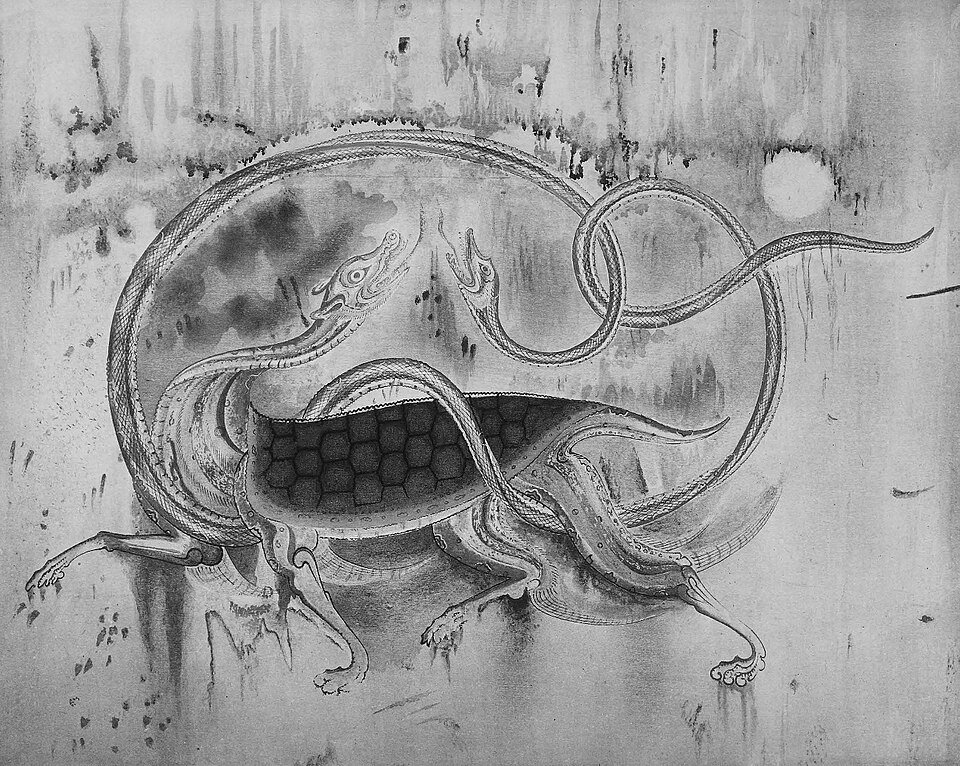
Credit: Wikimedia Commons, public domain
I — Interactions
- The Han in Korea: a Han army in 108 B.C.E.; Han towns until Goguryeo destroyed the last one in 313 C.E.
- The relay: China → Korea → Japan. Baekje's alliance with the Yamato court carried writing and Buddhism across the sea.
- Envoys from Japan went straight to China in the 600s.
- 660: Baekje destroyed; Japan's fleet defeated.
C — Cultural
- Chinese writing, adopted by Korea during the Han, then passed on to Japan.
- Buddhism: from India, through China, to Korea, to Japan. It came with temples, statues and holy books.
- Each people that received an idea did not just copy it; they made it their own.
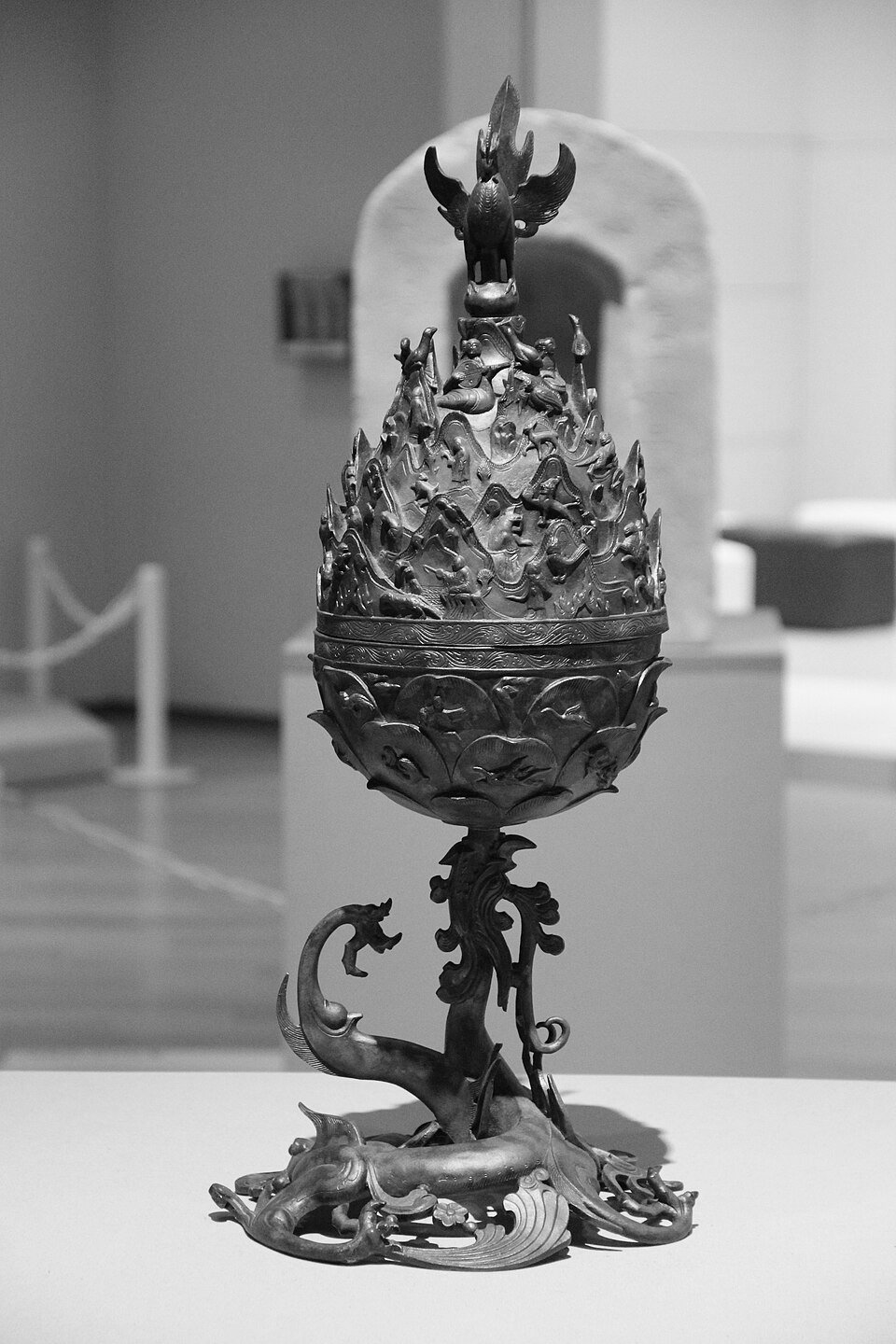
Credit: Gary Todd, Wikimedia Commons, CC0 (public domain)
E — Economic
- Goguryeo's land was hard to farm; it grew powerful by fighting.
- Baekje's ships carried goods to China and Japan.
- Under the Taika Reforms, the land and its people belonged to the state, not to private families.
T — Technology
- Ships crossing the sea between Korea, China and Japan.
- Writing as a technology of government: Chinese characters for records, laws and ideas.
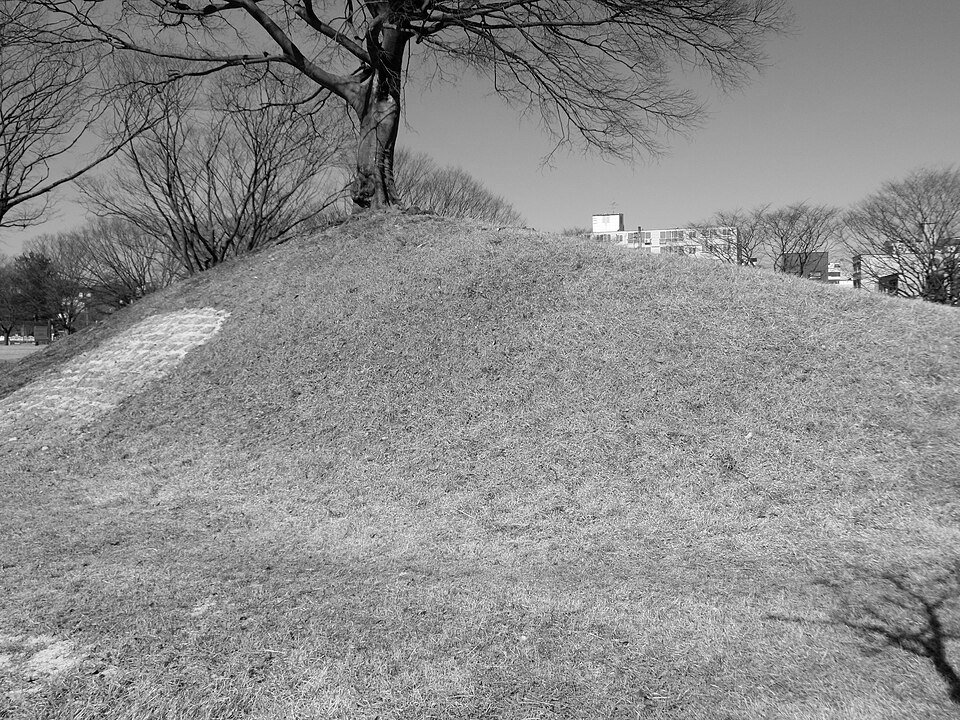
Credit: Abasaa, Wikimedia Commons, public domain
4. Big ideas
- The space the Han left (background). As the Han declined, it could no longer hold Korea, and three kingdoms rose to fill the space.
- Korea was the bridge. Korea adopted Chinese writing and Buddhism, then Baekje passed them on to Japan.
- Straight to the source. Japan stopped learning secondhand and sent envoys to China itself.
- A loss that sped things up. The fall of Baekje in 660 pushed Japan to reform faster.
- The Great Change. With the Taika Reforms and the Taiho Code, Japan rebuilt its whole government in China's image, by its own choice.
5. Key sources: how do we know what we know?
| Source | Who made it? When? | Insider or outsider? | What it tells us | Be careful! |
|---|---|---|---|---|
| Chinese chronicles (the Sanguozhi) | Chinese officials, 200s C.E. | Outsider | Goguryeo's mountains, poor harvests, and "fierce" people | Written by Chinese officials about a foreign people, not by the people of Goguryeo. |
| The Samguk Sagi | Korean historians, 1145 C.E. | Insider (Korean) | Korea's own history of the Three Kingdoms | Written nearly 500 years after the Three Kingdoms ended. |
| The Nihon Shoki ("Chronicles of Japan") | Japan's court, 720 C.E. | Insider (Japanese) | Baekje sending Buddhism; Shotoku's Constitution; the Reform Edict | Written by the court, often long after the events it describes. (Compare the Kojiki, 712 C.E.: the same family telling its own story.) |
| The Seventeen-Article Constitution | Prince Shotoku, 604 C.E. (recorded in the Nihon Shoki) | Insider | Shotoku's rules for good government: able people in every office | It shows what Shotoku wanted, not whether officials obeyed. |
| The Reform Edict of 646 | Japan's court (recorded in the Nihon Shoki) | Insider | Land and people taken from powerful families and given to the state | An order: it does not prove every family agreed. |
Long afterwards, or by their neighbours. For the Three Kingdoms, we read books written centuries later, or by outsiders. Always ask who wrote it, and when.
6. Timeline and vocabulary
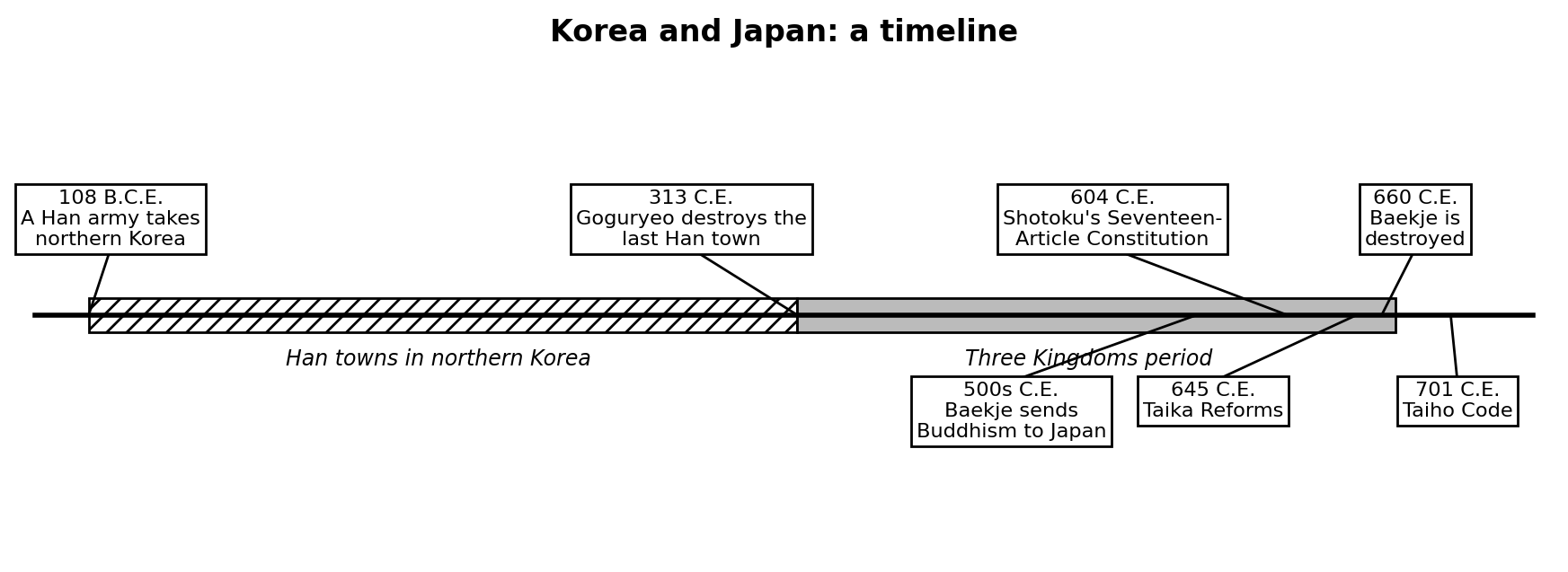
| Date | What happened |
|---|---|
| 108 B.C.E. | A Han army takes control of northern Korea |
| 200s C.E. | A Chinese chronicle describes Goguryeo |
| 313 C.E. | Goguryeo destroys the last Han town in Korea |
| 500s C.E. | Baekje sends Buddhism to the Yamato court |
| 604 C.E. | Prince Shotoku's Seventeen-Article Constitution |
| 645 C.E. | The Taika Reforms ("Great Change") |
| 660 C.E. | Baekje is destroyed; Japan's fleet is defeated |
| 701 C.E. | The Taiho Code |
| 720 C.E. | The Nihon Shoki is written |
| 1145 C.E. | The Samguk Sagi is written |
| Word | Meaning |
|---|---|
| peninsula | Land with water on almost every side |
| decline | To slowly lose strength |
| emerge | To come into being; to appear and grow stronger |
| kingdom | A land or state ruled by a king |
| influence | The power to change how others think or act, without force |
| adopt | To take an idea from somewhere else and make it your own |
| alliance | An agreement between states to help and protect each other |
| envoy | An official sent to represent a ruler in another land |
| bureaucracy | A government run by officials organized into ranks |
| rank | A person's level or position in a group or government |
| reform | A big change made to improve how a government works |
| centralized | With power gathered into the hands of the ruler at the centre |
| code | A written collection of all of a land's laws |
| legalist | Ruling by strict written laws |
7. Connections
Before: the Han (Unit 2)
The Han's decline (in-laws, usurpers, no tax money) left the space for Korea's three kingdoms to rise. See the Han packet.
Before: Yamato Japan (Unit 2)
The Yamato alliances with Korean states are the same story, seen from Japan's side. The Kojiki (712) and the Nihon Shoki (720) were both written by Japan's court. See the Yamato packet.
Across Asia: Buddhism travels
Buddhism began in India. Ashoka sent missionaries. It travelled through China, to Korea, and on to Japan. What travels, changes. See the Mauryan packet.
Echoes of the Qin
Japan's Taiho Code was a legalist system of written laws, ranks and departments: the same kind of machine the Qin built and the Han kept. See the Qin packet.
8. Where students lose marks on this topic
| Mistake | Fix |
|---|---|
| "Korea invented its own writing first" | No. Korea adopted Chinese characters during the Han. |
| "Buddhism began in China" | It began in India, then spread through China to Korea and Japan. |
| "China forced Japan to change" | No enemy forced the changes. Japan chose to rebuild itself in China's image. |
| "Losing Baekje slowed Japan down" | The opposite. It pushed Japan to reform faster. |
| Mixing up Taika and Taiho | Taika Reforms = 645, the "Great Change": power to the emperor. Taiho Code = 701: the written laws. |
| Saying the Samguk Sagi was written at the time | It was written in 1145, nearly 500 years after the Three Kingdoms ended. |
| Choosing "written in 1145" for a Chinese chronicle from the 200s | That date belongs to the Samguk Sagi. Match each date to the right source. |
| Choosing "everyone in Japan immediately became Buddhist" | Too strong, and not in the passage. |
| Choosing "every person in Goguryeo was a warrior" | Too strong. The source describes a people "fond of attacking their neighbours", not every person. |
| Choosing "Baekje and Japan were enemies" | An invention. They were allies. |
Self-check
Cover the answers. Can you answer these in complete sentences?
- Identify the three kingdoms of Korea and where each one was.
- Identify the two states in southern Korea that were allied with Japan's Yamato court.
- Identify the two things Korea adopted from China and passed on to Japan.
- Explain how Korea acted as a bridge between China and Japan.
- Explain how the fall of Baekje pushed Japan to adopt a Chinese-style bureaucracy.
- Describe what the Taiho Code did.
Check your answers (click to open)
- The three kingdoms were Goguryeo in the north, Baekje in the southwest, and Silla in the southeast.
- The Yamato court was allied with the kingdom of Baekje and its smaller neighbour, Gaya.
- Korea adopted Chinese writing and Buddhism, and passed both on to Japan.
- Korea took in writing and Buddhism from China, then Baekje passed them on to Japan through its alliance with the Yamato court. So Korea carried China's ideas across the sea.
- When Baekje was destroyed in 660, Japan lost its closest ally and its bridge to the mainland. Japan had to become strong and organized on its own, so it built a Chinese-style government of ranked, trained officials even faster.
- The Taiho Code was a full set of written laws for the whole land, modelled on China's. It sorted the government into ranks and departments, set the same rules for everyone, and made Chinese writing the official language of government.