Home › East Asian Civilization › Unit 3
The Rise of the Samurai (about 900–1192 C.E.)
East Asian Civilization · Unit 3 · Civilization Packet
1. At a glance
| Question | Answer |
|---|---|
| When? | About 900–1192: from the late Heian period to the first shogun |
| Where? | Japan: the provinces (countryside), then the capital Kyoto, then Kamakura in the east |
| Who? | Bushi (samurai): warriors loyal to their lord. Two great warrior clans: the Taira and the Minamoto. |
| Known for | Warriors becoming more powerful than the court; the Genpei War (1180–1185); the first shogunate: a military government |
| How did it end? | The Minamoto won the Genpei War. In 1192, Minamoto no Yoritomo became shogun and ruled from Kamakura. The emperor stayed in Kyoto. |
| How do we know? | The Tale of the Heike, an epic story recited for centuries; the shogunate's own chronicle; picture scrolls made after the events |
Unit 3's big question: why do empires fall apart, and how do they come back together? In Japan, the court did not fall: it lost control. The people with the swords took over.
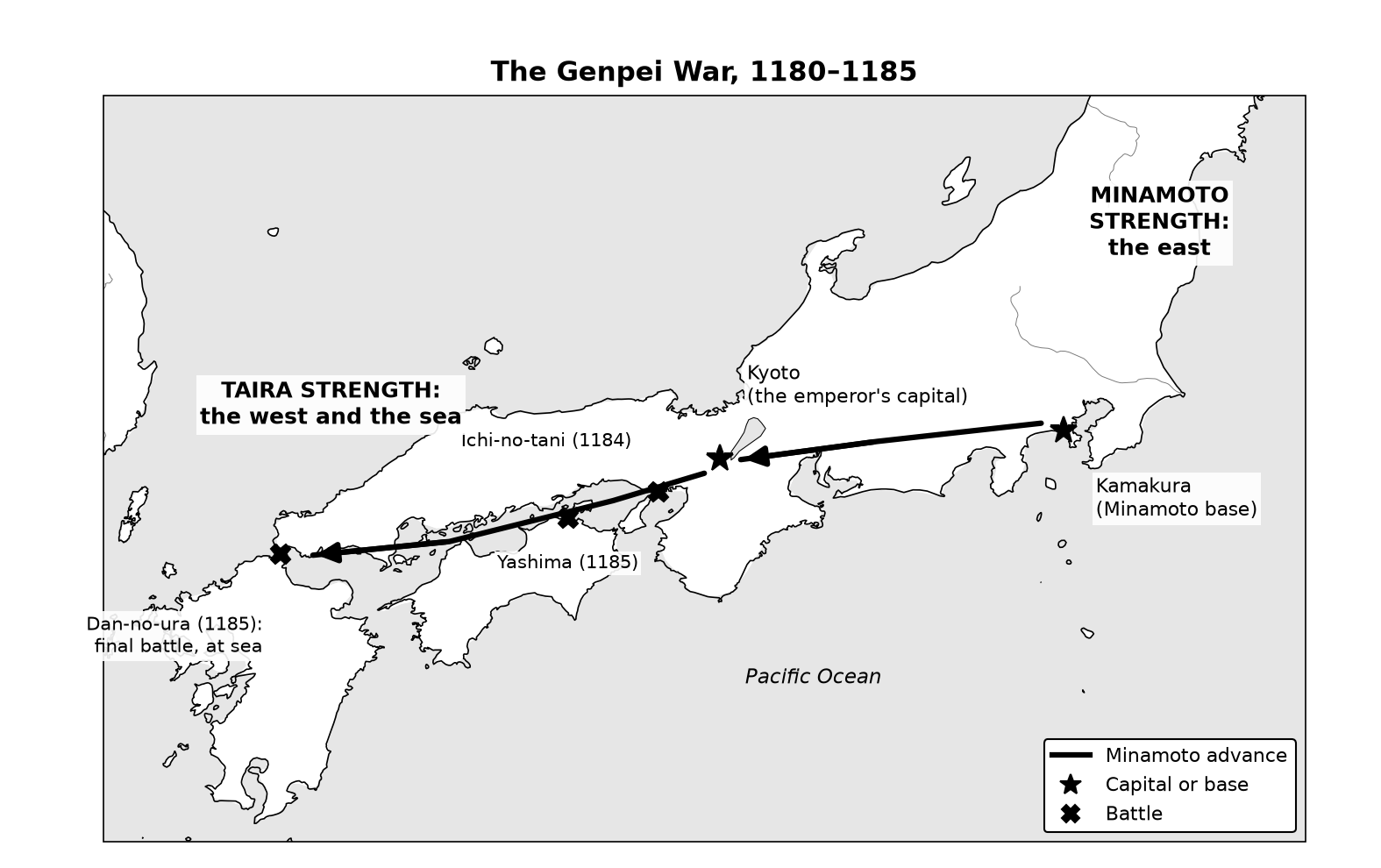
Map notes: The Taira held the capital, Kyoto, and the west. The Minamoto built their base far to the east, at Kamakura. The last battle was at sea, at Dan-no-ura, in the far west.
Do not confuse: "Genpei" is the name of the war, not a clan. It joins two names: Gen (= Minamoto) and Hei (= Taira).
2. How warriors took power: a chain of causes
Each step caused the next. Learn the chain:
- The Taika Reforms failed. The plan was that all land belonged to the emperor, and farmers paid taxes.
- Shoen grew. Nobles and temples built up private estates (shoen) that did not pay taxes. The government grew poorer and weaker.
- The estates needed protection. The government could not keep order in the provinces, so estate owners hired warriors: the bushi.
- Warriors formed clans. Warriors were loyal to their lord, not to the emperor. The two strongest warrior clans were the Taira and the Minamoto.
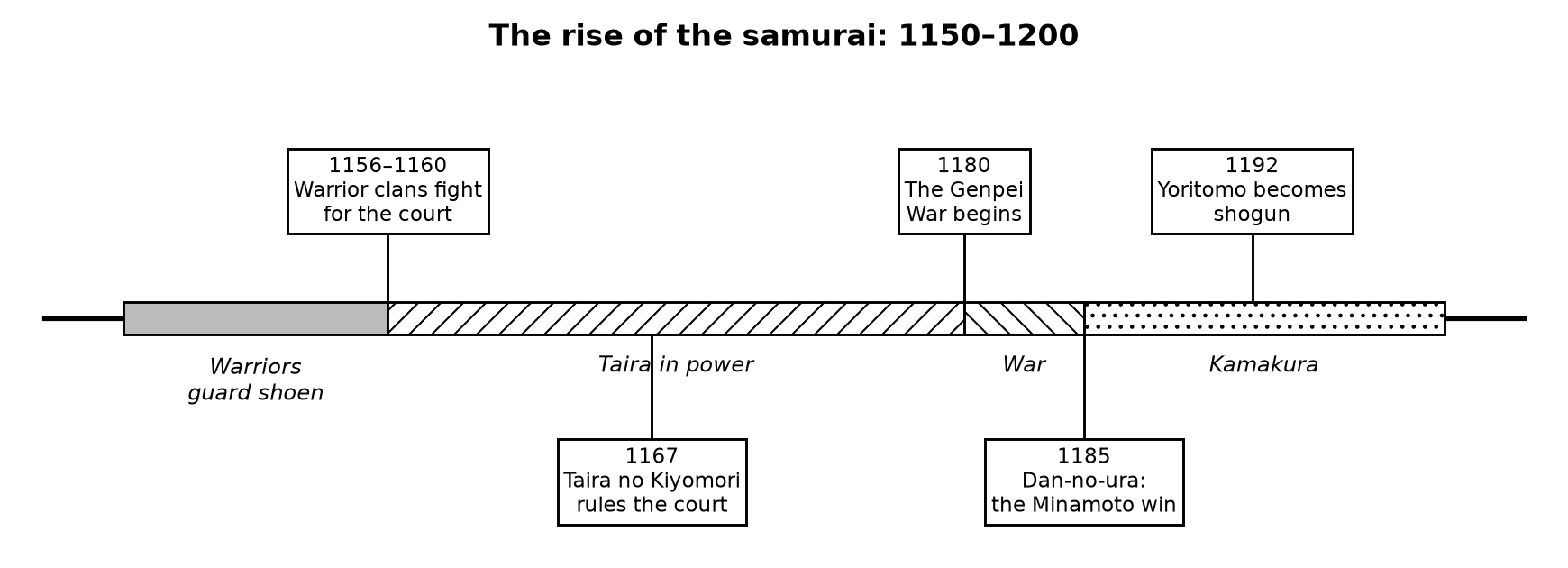
- The court needed the warriors. In the 1150s, nobles in Kyoto fought over power and asked the warrior clans for help. The Taira won and took control of the court.
- The Genpei War (1180–1185). The Minamoto rose against the Taira. The Minamoto won.
- The shogunate. Minamoto no Yoritomo became shogun in 1192. Japan now had a military government.
Pattern: the Fujiwara controlled the emperor through marriage. The shogun controlled the emperor through military force. Same emperor, different hands on the power.
3. SPICE-T: the rise of the samurai
SPICE-T = Social, Political, Interactions, Cultural, Economic, Technology.
S — Social
- Bushi (warriors) became a new, powerful class.
- At first, warriors were hired guards for estates. Over time, they became lords of the land themselves.
- Loyalty to your lord was the most important value. A lord gave his warriors land and protection. Warriors gave service in war.
- The famous code of bushido was written down much later (1600s). Early samurai were practical fighters.
P — Political
- The emperor in Kyoto kept his title and his religious role, but lost real power.
- Taira no Kiyomori controlled the court from the 1160s. His grandson, Antoku, became emperor as a small child.
- Minamoto no Yoritomo set up his government at Kamakura, far from the court.
- Two governments: the emperor in Kyoto (ceremony and religion) and the shogun in Kamakura (army, land and law).
- Yoritomo placed his own men in the provinces as land stewards (jito) to collect taxes and keep order.
I — Interactions
- War between warrior clans: the Genpei War (1180–1185).
- The final battle, Dan-no-ura (1185), was fought at sea. The Taira lost, and the child emperor Antoku drowned.
- Japan still traded with Song China. Chinese coins and books arrived by ship.
C — Cultural
- The Tale of the Heike told the story of the Taira's rise and fall. Blind monks chanted it, playing a lute called a biwa.
- Its first line teaches a Buddhist idea: nothing lasts. "The proud do not endure."
- Pure Land Buddhism spread to ordinary people: anyone who called on the Buddha Amida could be saved.
- Zen Buddhism came from China in the late 1100s. It later became popular with samurai.
Credit: Museum of Fine Arts, Boston, Wikimedia Commons, public domain
E — Economic
- Land was wealth. Lords paid their warriors with land or with rice from the land.
- Shoen (tax-free estates) took land and taxes away from the government.
- Whoever controlled the land controlled the warriors, and whoever controlled the warriors controlled Japan.
T — Technology
- The bow on horseback: early samurai were mounted archers first. Their way was called "the way of the bow and horse".
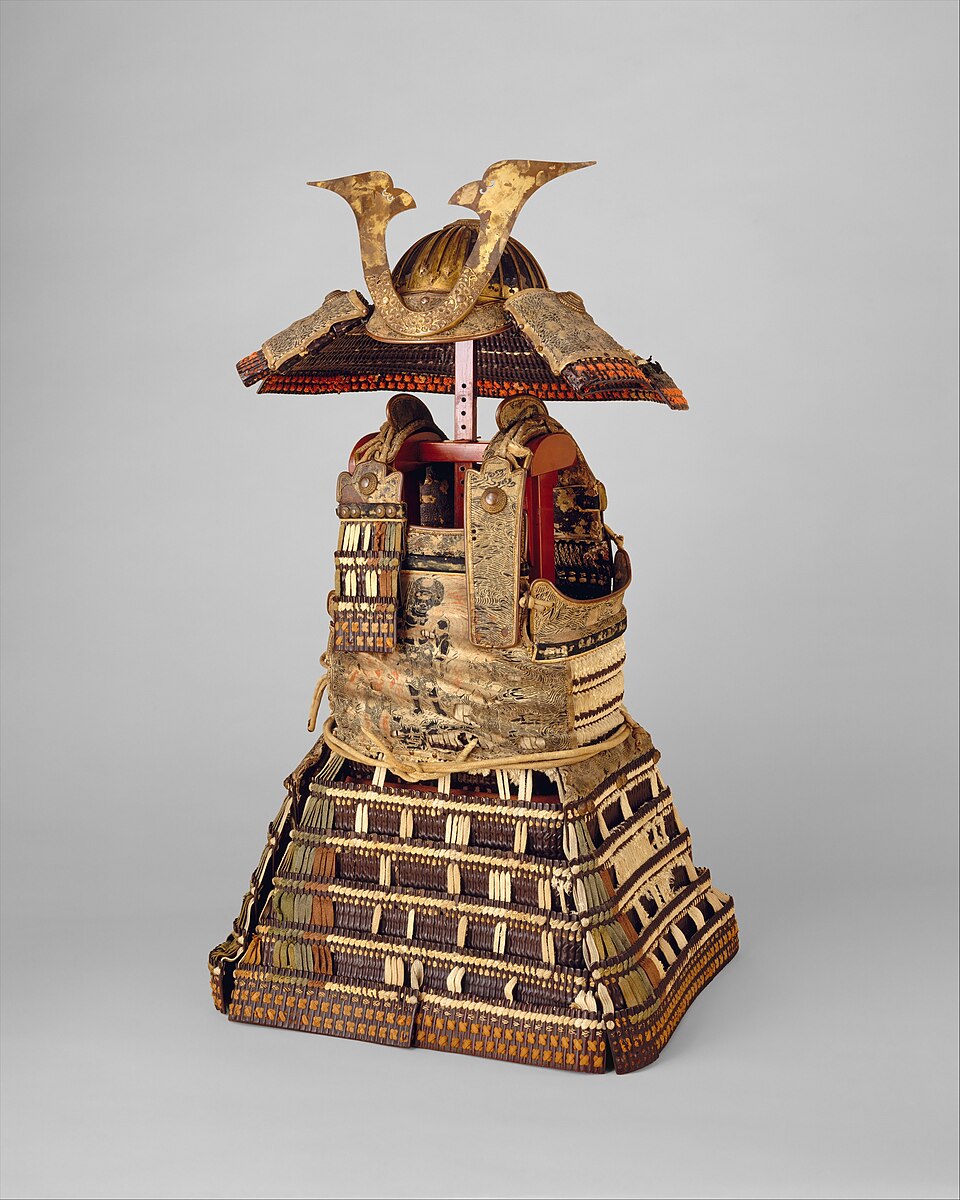
- Armour: large, boxy armour (o-yoroi) made of small plates laced together with silk cords.
- The curved sword (tachi): a long, curved sword, made to be used from horseback.
Credit: The Metropolitan Museum of Art, Wikimedia Commons, CC0 (public domain)
4. Big ideas
- The samurai began as guards. Tax-free shoen estates needed protection, so their owners hired warriors. (Cause → effect.)
- Loyalty to the lord, not the emperor. Warriors served whoever gave them land. That made warrior clans more powerful than the court.
- The Genpei War decided who ruled. The Minamoto defeated the Taira (1180–1185).
- A military government. Minamoto no Yoritomo became the first shogun of the Kamakura shogunate (1192).
- The emperor stayed. The shogun ruled, but kept the emperor for legitimacy. Japan's emperors were never removed, only controlled: first by the Fujiwara, then by the shogun.
5. Key sources: how do we know what we know?
| Source | Who made it? When? | Insider or outsider? | What it tells us | Be careful! |
|---|---|---|---|---|
| The Tale of the Heike | Many storytellers; chanted by blind monks; written down in the 1200s–1300s | Insider (Japanese), but made after the events | The story of the Genpei War, its heroes and its battles | It is an epic story, retold and changed many times. It teaches a Buddhist lesson: the proud fall. |
| Azuma Kagami (Mirror of the East) | The Kamakura shogunate, about 1300 | Insider (the winners) | Yoritomo's government, his officials and his decisions | Written by the shogunate about its own founder. Possible bias. |
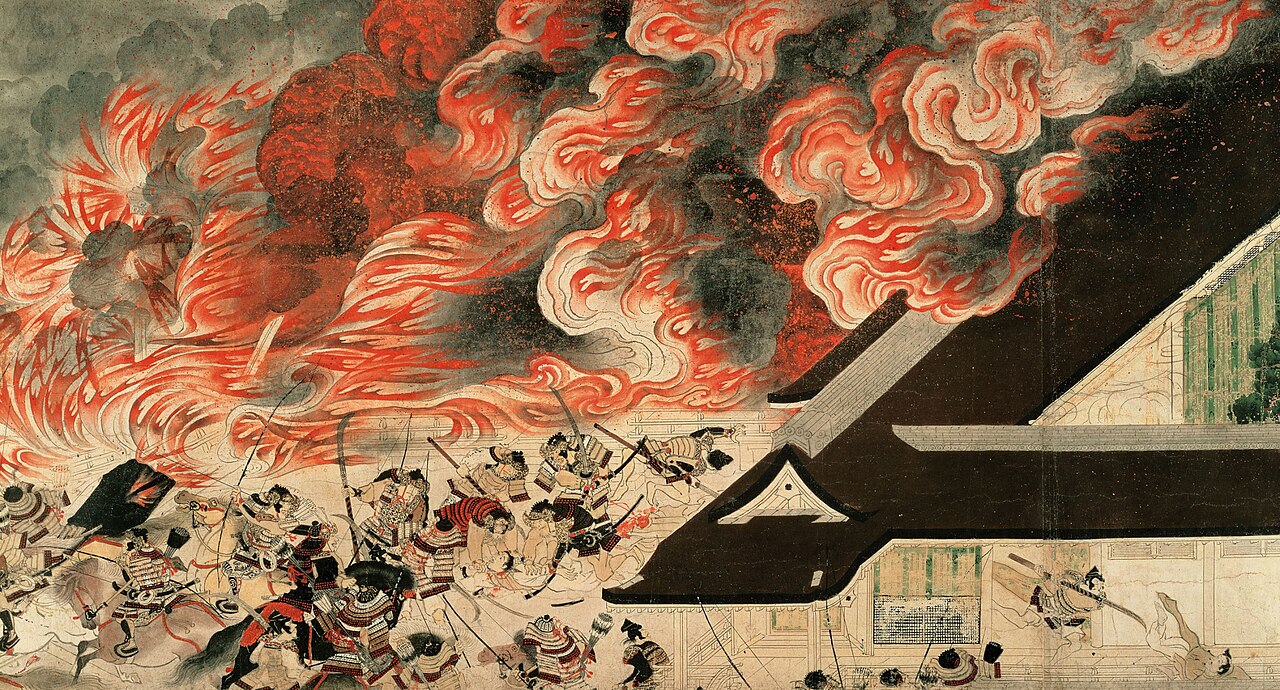
| Heiji picture scroll | Artists, more than 100 years after the events (late 1200s) | Insider, but later | Warriors, horses, armour and fire in a real attack on a palace in 1159 | The artist was not there. He painted what people remembered, and what looked exciting. |
| Diaries of court nobles | Kyoto nobles, written at the time | Insider (the court) | How the court saw the warriors: as rough and dangerous | Nobles looked down on warriors. |
Says vs. knows: The Tale of the Heike says the Taira fell because they were proud. That is a lesson, not a historian's explanation. Historians also point to land, loyalty and money. Ask: is this source telling us what happened, or what we should learn?
Source questions to ask every time: Who made it? When? Why did they make it? What can it tell us? What can it not tell us?
6. Timeline and vocabulary
| Word | Meaning |
|---|---|
| shoen | Private estates that did not pay taxes to the government |
| bushi | Warriors; the early name for the samurai |
| samurai | Japanese warriors who served a lord |
| lord | A powerful landowner who gave land and protection in return for service |
| loyalty | Faithfully supporting someone, even when it is hard |
| clan | A large group of families who share an ancestor and fight together |
| Taira | A warrior clan that controlled the court in the 1160s–1170s, then lost the Genpei War |
| Minamoto | The warrior clan that won the Genpei War |
| Genpei War | The war between the Taira and the Minamoto (1180–1185) |
| shogun | The top military commander of Japan, who held the real power |
| shogunate | A government run by a shogun |
| Kamakura | The shogun's base in eastern Japan |
| legitimacy | The accepted right to rule |
7. Connections
Before: the Heian court
The Fujiwara ruled through the emperor with marriage. The samurai would do it with force. Read the Nara and Heian Japan packet.
Across Asia: the Late Tang
| Late Tang China | Late Heian Japan | |
|---|---|---|
| Who gained power | Generals in the provinces | Warrior clans in the provinces |
| Why | The An Lushan Rebellion weakened the centre | Shoen weakened the government's land and taxes |
| What happened next | The Tang fell (907) | The emperor stayed, but a shogun ruled |
The difference: in China, a weak dynasty was replaced (the Mandate of Heaven could be taken back). In Japan, the emperor's family was never replaced, only controlled.
Coming next (Unit 4)
The Kamakura shogunate will face the Mongols, who tried to invade Japan in 1274 and 1281.
8. Where students lose marks on this topic
| Mistake | Fix |
|---|---|
| Saying "Genpei" is a clan | Genpei is the war. The clans are the Taira and the Minamoto. |
| Saying the Taira won | The Minamoto won. |
| Saying the shogun replaced the emperor | The emperor stayed in Kyoto. The shogun held the real power in Kamakura. |
| Saying samurai were loyal to the emperor | Samurai were loyal to their lord, who gave them land. |
| Saying samurai mostly fought with swords | Early samurai were mainly mounted archers: bow and horse. |
| Saying Japan used the civil service exam | That was China. Japan never did. |
| Skipping the cause chain | Explain it: shoen → need for protection → warriors → warrior clans → Genpei War → shogun. |
Self-check
Cover the answers. Can you answer these in complete sentences?
- What were shoen, and why did they weaken the government?
- Why did samurai first appear?
- Who fought in the Genpei War, and who won?
- Who became the first shogun of the Kamakura shogunate, and when?
- How was the shogun's power similar to the Fujiwara's power? How was it different?
- Why is The Tale of the Heike not the same as a history book?
Check your answers (click to open)
- Shoen were private estates that did not pay taxes, so the government lost land and money and grew weaker.
- Samurai first appeared because shoen estates needed protection, and the government could not keep order in the provinces.
- The Taira and the Minamoto fought in the Genpei War (1180–1185), and the Minamoto won.
- Minamoto no Yoritomo became the first shogun of the Kamakura shogunate in 1192.
- Both the shogun and the Fujiwara kept the emperor and ruled through him. The Fujiwara used marriage and regency, but the shogun used military force.
- The Tale of the Heike is an epic story, retold and changed many times, that teaches a Buddhist lesson. It was not written to record exactly what happened.