Home › East Asian Civilization › Unit 3
The Tang Dynasty (618–907 C.E.)
East Asian Civilization · Unit 3 · Civilization Packet
1. At a glance
| Question | Answer |
|---|---|
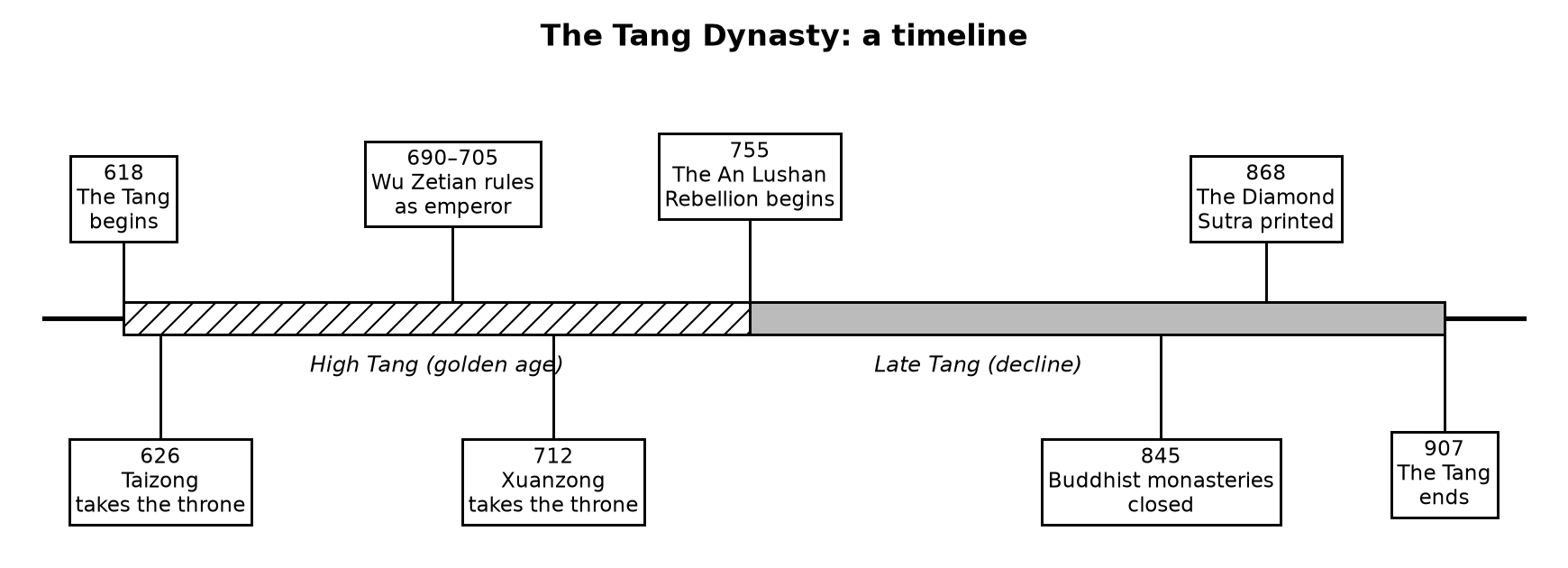
| When? | 618–907 C.E.: almost 300 years. The High Tang (618–755) was a golden age. The Late Tang (755–907) was a slow decline. |
| Where? | All of China, and far west into Central Asia along the Silk Road |
| Capital | Chang'an, one of the biggest cities in the world, with about one million people |
| Famous rulers | Taizong (a model Confucian ruler); Wu Zetian (the only woman to rule China as emperor); Xuanzong (the High Tang at its peak) |
| Known for | A golden age; the civil service exam; poetry (Li Bai, Du Fu); sancai (three-coloured) pottery; printing; a cosmopolitan capital |
| How did it end? | The An Lushan Rebellion (755–763) weakened the government. Generals in the provinces became powerful. Rebellions ended the Tang in 907. |
| How do we know? | Poems by people who lived through it; tomb objects; the oldest dated printed book; histories written after the Tang fell |
Unit 3's big question: why do empires fall apart, and how do they come back together? The Tang shows both: a golden age built on the Sui's tools, then a rebellion that broke the centre's power.
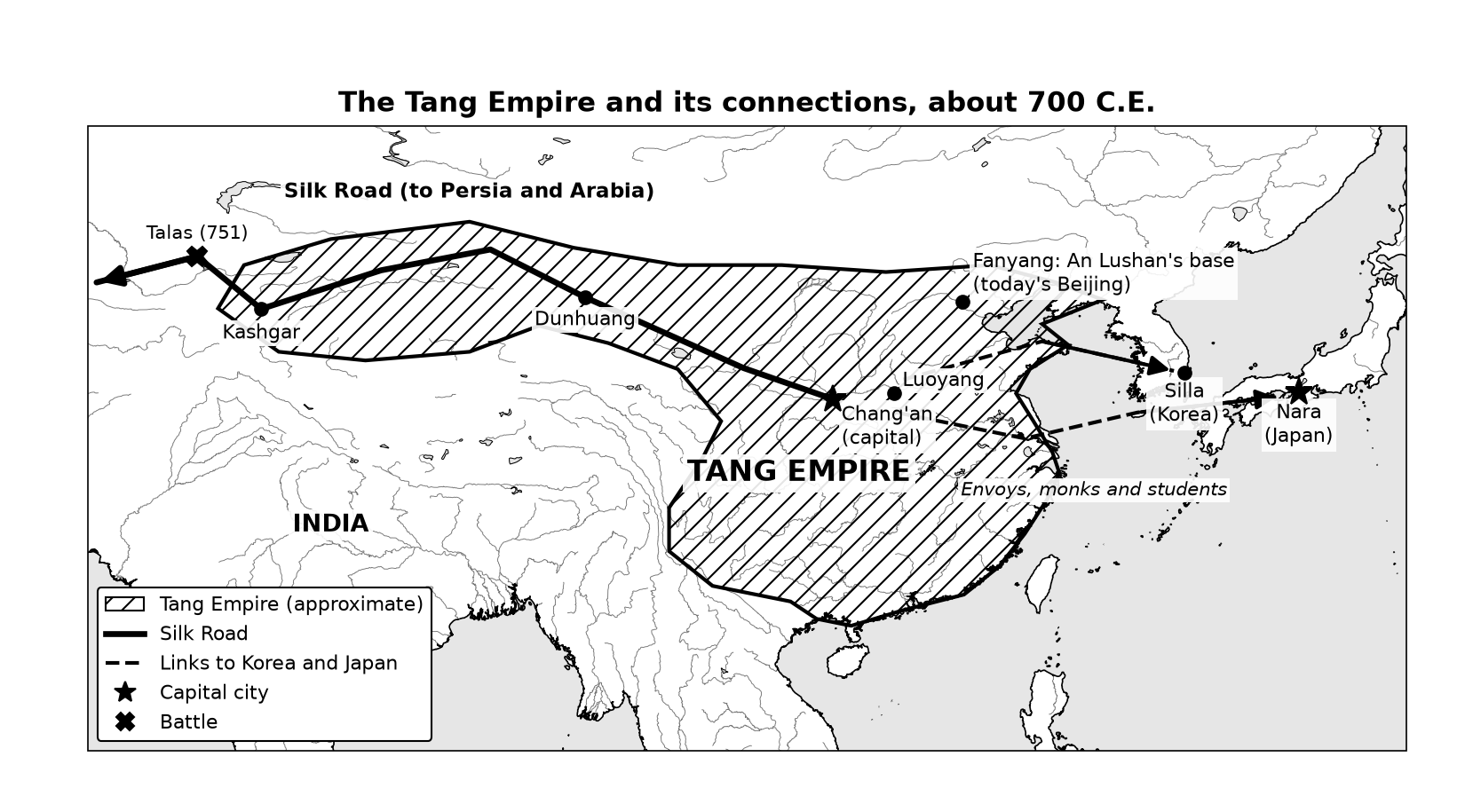
Map notes: At its largest, the Tang controlled the Silk Road far into Central Asia. Goods, people and ideas travelled east to Chang'an, then on to Korea and Japan.
Do not confuse: the Tang (618–907) came after the Sui (581–618). The Sui reunified China. The Tang had the golden age.
2. The High Tang and the Late Tang
The Tang has two halves. The An Lushan Rebellion (755) is the line between them.
| High Tang (618–755) | Late Tang (755–907) | |
|---|---|---|
| Government | Strong central government; the emperor controlled the empire | Weak central government; generals in the provinces had their own armies |
| Peace | Stability (peace and order) | Rebellions and fighting |
| Wealth | Prosperity: trade and farming made China rich | Trade and taxes fell |
| Remembered as | A golden age | A slow decline |
What was the An Lushan Rebellion? An Lushan was a powerful general who commanded huge armies on the northern border. In 755, he rebelled against Emperor Xuanzong and captured Chang'an. The war lasted eight years and killed millions of people. The Tang won, but the emperors never fully controlled the provinces again.
3. SPICE-T: the Tang Dynasty
SPICE-T = Social, Political, Interactions, Cultural, Economic, Technology.
S — Social
- The civil service exam let some men rise by merit (ability), not only by family. Most officials still came from rich families, who could pay for years of study.
- Women in the High Tang had more freedom than in later dynasties. Some rode horses and played polo.
- Chang'an was cosmopolitan: people from Persia, Central Asia, Korea, Japan and Arabia lived and traded there.
- Most people were farmers. Most farmers could not read.
P — Political
- The Tang kept the Sui's tools: a centralized government, one law code, the Grand Canal and the civil service exam.
- Taizong (ruled 626–649) listened to advisers who criticized him. He was remembered as a model Confucian ruler.
- Wu Zetian (ruled 690–705) is the only woman in Chinese history to rule as emperor in her own name. She expanded the exam and supported Buddhism.
- Xuanzong (ruled 712–756) led the High Tang at its peak, then lost control in the An Lushan Rebellion.
- After 755: the government grew weak. Generals in the provinces became more powerful than the emperor.
I — Interactions
- The Silk Road was at its busiest. Merchants brought horses, glass, silver and spices to China. China sent silk and pottery west.
- The monk Xuanzang travelled to India (629–645) and brought back hundreds of Buddhist books, like Fa Xian before him.
- Korea and Japan sent students and monks to Chang'an to learn. Japan built its capital, Nara, like Chang'an.
- In 751, a Tang army lost to an Arab army at the Battle of Talas in Central Asia.
C — Cultural
- Poetry: the Tang is China's greatest age of poetry. Li Bai wrote about nature, friendship and the moon. Du Fu wrote about war and suffering, including the An Lushan Rebellion.
- Why did poetry grow? Writing poetry was part of the civil service exam, so educated men studied hard to write well.
- Sancai pottery: figures of horses, camels and people, glazed in three colours (green, amber and cream). Many were buried in tombs.
- Religion: Buddhism was very influential, alongside Daoism and Confucianism. Chang'an also had Christian, Zoroastrian and Muslim visitors.
- Be careful with "tolerance": in 845, a Late Tang emperor closed thousands of Buddhist monasteries and took their land.
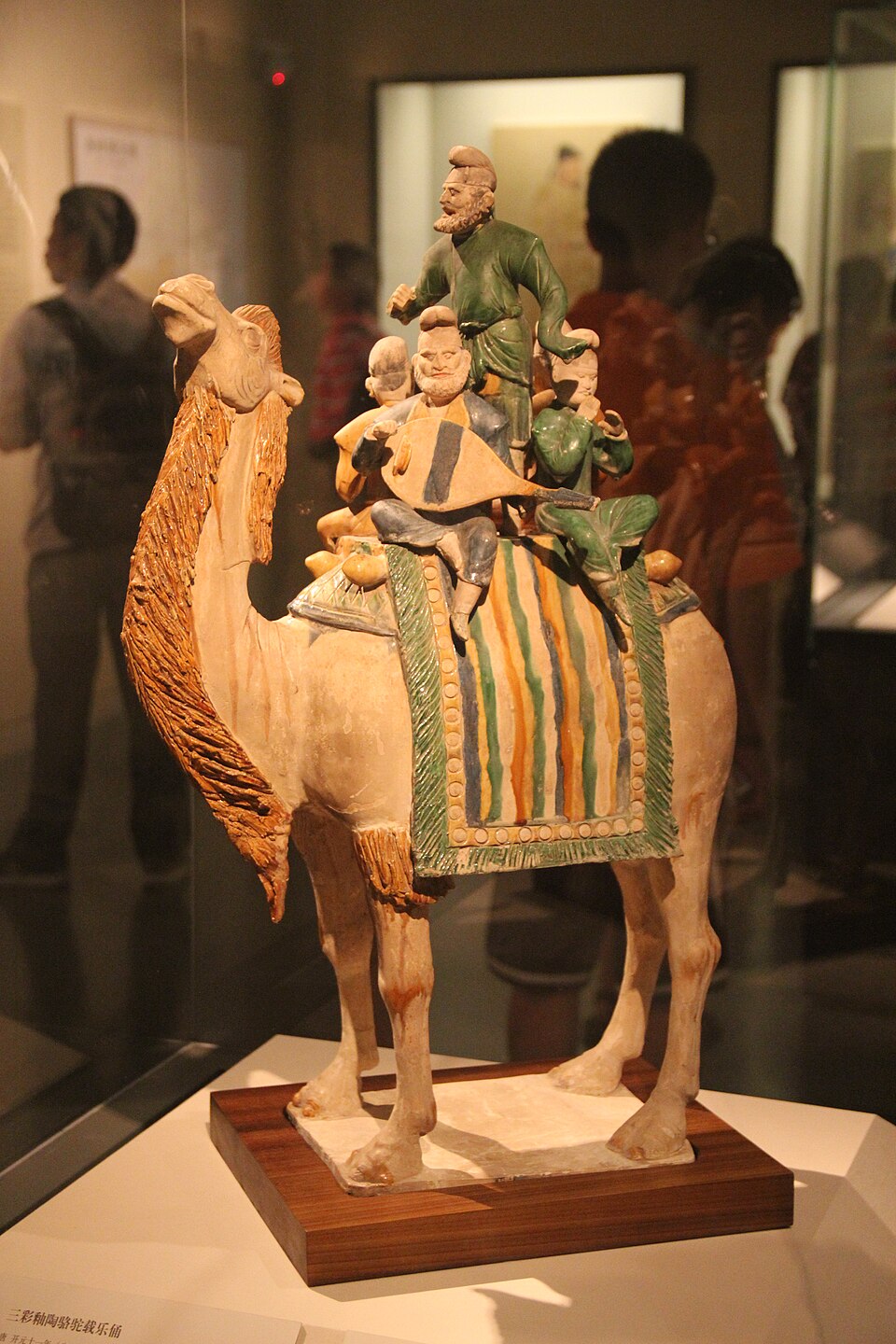
Credit: Gary Todd, Wikimedia Commons, CC0 (public domain)
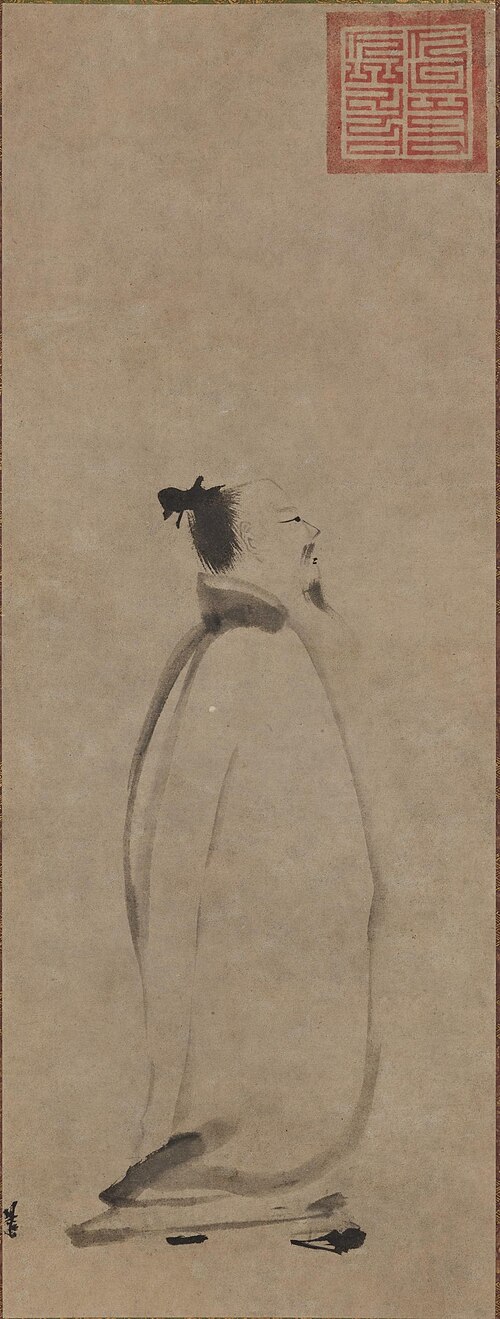
Credit: Liang Kai, Tokyo National Museum, Wikimedia Commons, public domain
E — Economic
- Farming was the base of the economy. Farmers paid taxes in grain and cloth.
- The Grand Canal carried rice from the south to the north.
- The Silk Road made Chang'an rich. The city had two huge markets: the East Market and the West Market.
- Tea became a popular drink across China.
T — Technology
- Woodblock printing: whole pages were carved into wood and printed. The Diamond Sutra (868) is the oldest dated printed book in the world.
- Gunpowder: Daoist scientists discovered it while trying to make medicine for long life.
- Porcelain: Tang potters made early porcelain, thin, hard and white.
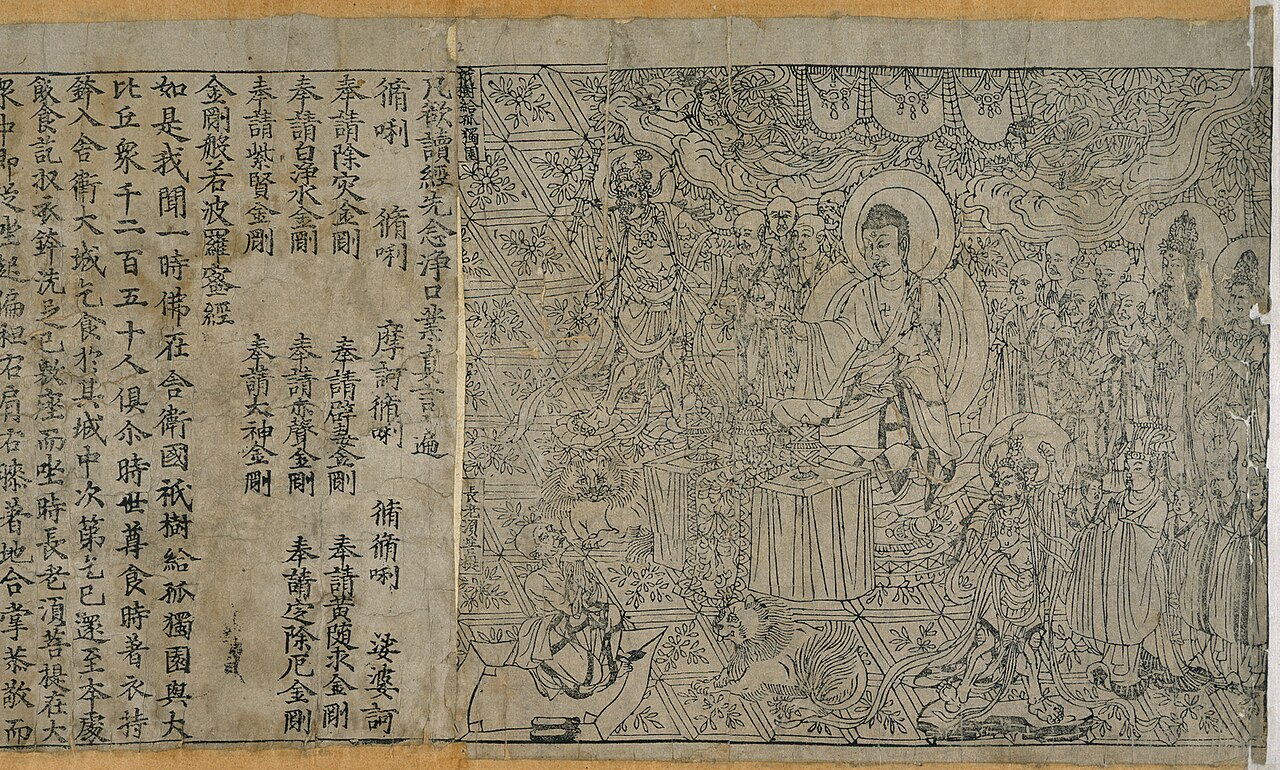
Credit: British Library, Wikimedia Commons, CC0 (public domain)
4. Big ideas
- The Tang built on the Sui. It kept the Sui's government, exam and canal, and lasted almost 300 years.
- The High Tang was a golden age. Peace (stability) and wealth (prosperity) gave people time and money for poetry, art and learning.
- The exam shaped culture. Because the exam tested writing, educated men studied poetry, and Tang poetry flourished.
- Chang'an was cosmopolitan. The Silk Road brought people, goods and religions from across Asia. Tang culture then spread to Korea and Japan.
- One rebellion changed everything. The An Lushan Rebellion (755) broke the central government's power. Power moved to generals in the provinces, and the Tang slowly declined.
5. Key sources: how do we know what we know?
| Source | Who made it? When? | Insider or outsider? | What it tells us | Be careful! |
|---|---|---|---|---|
| "Spring View" (a poem) | Du Fu, in Chang'an during the rebellion, 757 | Insider (an eyewitness) | How the An Lushan Rebellion felt: "The nation is broken, but hills and rivers remain" | A poem shows feelings, not numbers. One man's experience. |
| The Diamond Sutra | Printed for a man named Wang Jie, 868; found in a cave at Dunhuang in 1900 | Insider (artefact) | Tang printing technology; the importance of Buddhism | It was hidden in a cave for 900 years. We were lucky it survived. |
| Sancai tomb figures | Tang potters, about 700–750 | Insider (artefact) | What rich families valued: horses, camels, foreign traders | They come from rich people's tombs, not from ordinary farmers. |
| Great Tang Records on the Western Regions | The monk Xuanzang, 646 | Insider for China; outsider in India | The lands and peoples along the Silk Road and in India | Written for the emperor, who wanted information about the west. |
| Old Book of Tang | Historians of a later dynasty, 945 | Outsider (written after the Tang fell) | The Tang's rulers, wars and officials | Written after the Tang, by people with their own reasons. |
Says vs. knows: the histories say the An Lushan Rebellion killed millions. The numbers come from tax records: the number of registered households fell sharply. But people who fled or hid also disappeared from the records. We know the rebellion was terrible. We do not know exactly how many died.
Source questions to ask every time: Who made it? When? Why did they make it? What can it tell us? What can it not tell us?
6. Timeline and vocabulary
| Word | Meaning |
|---|---|
| golden age | A period remembered after the fact as a time of great success in art, science and government |
| High Tang | The Tang golden age, 618–755 |
| Late Tang | The Tang's slow decline, 755–907 |
| An Lushan Rebellion | A huge rebellion (755–763) led by the general An Lushan; it weakened the Tang government |
| stability | Peace and order |
| prosperity | Wealth and success |
| civil service exam | A test on Confucian books, and on writing, that people took to get government jobs |
| meritocracy | A system where jobs are earned by ability, not by family |
| cosmopolitan | Full of people from many cultures and countries |
| sancai | Tang pottery glazed in three colours |
| woodblock printing | Printing whole pages from carved wooden blocks |
| decentralization | Power moving away from the central government to local leaders |
7. Connections
Before: the Sui (581–618)
The Tang kept the Sui's government, exam and Grand Canal. Read the Sui packet.
Across Asia: comparing golden ages
| SPICE-T | Gupta India (about 320–550) | High Tang China (618–755) |
|---|---|---|
| What came before | A time of small, fighting kingdoms | The Period of Disunion |
| Political | Re-unified northern India; less centralized | Centralized; the civil service exam |
| Cultural | The Nine Jewels: Kalidasa, Sushruta, Aryabhata | Poetry: Li Bai, Du Fu; sancai pottery |
| Religion | Hindu rulers supported Buddhists | Buddhism, Daoism and Confucianism side by side |
| How it ended | Invasions by the White Huns | The An Lushan Rebellion, then generals in the provinces |
The pattern: disunion → reunification → stability → golden age → decline.
Coming next: Nara and Heian Japan
Japan copied Tang China: its government, its Buddhism, its writing and even the shape of Chang'an. Read the Nara and Heian Japan packet.
8. Where students lose marks on this topic
| Mistake | Fix |
|---|---|
| Saying the Tang reunified China | The Sui reunified China in 589. The Tang came next. |
| Saying the Tang ended in 755 | The rebellion began in 755. The Tang ended in 907. |
| Saying the exam was open to everyone | Anyone could try, but mostly rich families could pay for years of study. |
| Saying Wu Zetian was an empress married to the emperor | She was the only woman to rule as emperor in her own name. |
| Saying "Golden Age" without saying why | Give the cause: stability and prosperity gave people time and money for culture. |
| Saying the Tang always tolerated Buddhism | It was very influential, but in 845 monasteries were closed. |
Self-check
Cover the answers. Can you answer these in complete sentences?
- What is the difference between the High Tang and the Late Tang?
- Give TWO pieces of evidence that the High Tang was a golden age.
- Why did poetry grow during the Tang?
- Why is Wu Zetian important?
- Explain ONE effect of the An Lushan Rebellion.
- Why is Du Fu's poem "Spring View" useful evidence, and what is its limit?
Check your answers (click to open)
- The High Tang (618–755) was a golden age with a strong central government, while the Late Tang (755–907) was a slow decline after the An Lushan Rebellion, when generals in the provinces became powerful.
- The High Tang produced great poetry by Li Bai and Du Fu, and Chang'an was a rich, cosmopolitan city full of people from across Asia. (Also correct: sancai pottery, the civil service exam, printing.)
- Poetry grew because writing poetry was part of the civil service exam, so educated men studied hard to write well.
- Wu Zetian is important because she was the only woman to rule China as emperor in her own name, and she expanded the civil service exam.
- One effect of the An Lushan Rebellion was that the central government became weak, and generals in the provinces became more powerful than the emperor.
- "Spring View" is useful because Du Fu was an eyewitness in Chang'an during the rebellion. Its limit is that it shows one man's feelings, not facts and numbers.